Collector evidence note
The 2025 Nördlingen Conference: Key Takeaways for Collectors
The practical takeaway is narrow: until conference-specific documentation is available, collectors should not use any claimed 2025 Nördlingen Geological Conference summary as evidence for moldavite authenticity, provenance, value, or new scientific consensus.
That does not mean every circulating claim is false. It means the claim is not yet documented well enough to support collector decisions. A geological conference can matter when its program, abstract book, proceedings, publisher records, or institutional pages show relevant impact research. For this page, no usable public source set has been supplied to confirm the event details, sessions, papers, speakers, findings, or collector implications.
So the useful question is not “what did the conference prove?” It is: what would count as a reliable takeaway, and where should collectors stop?
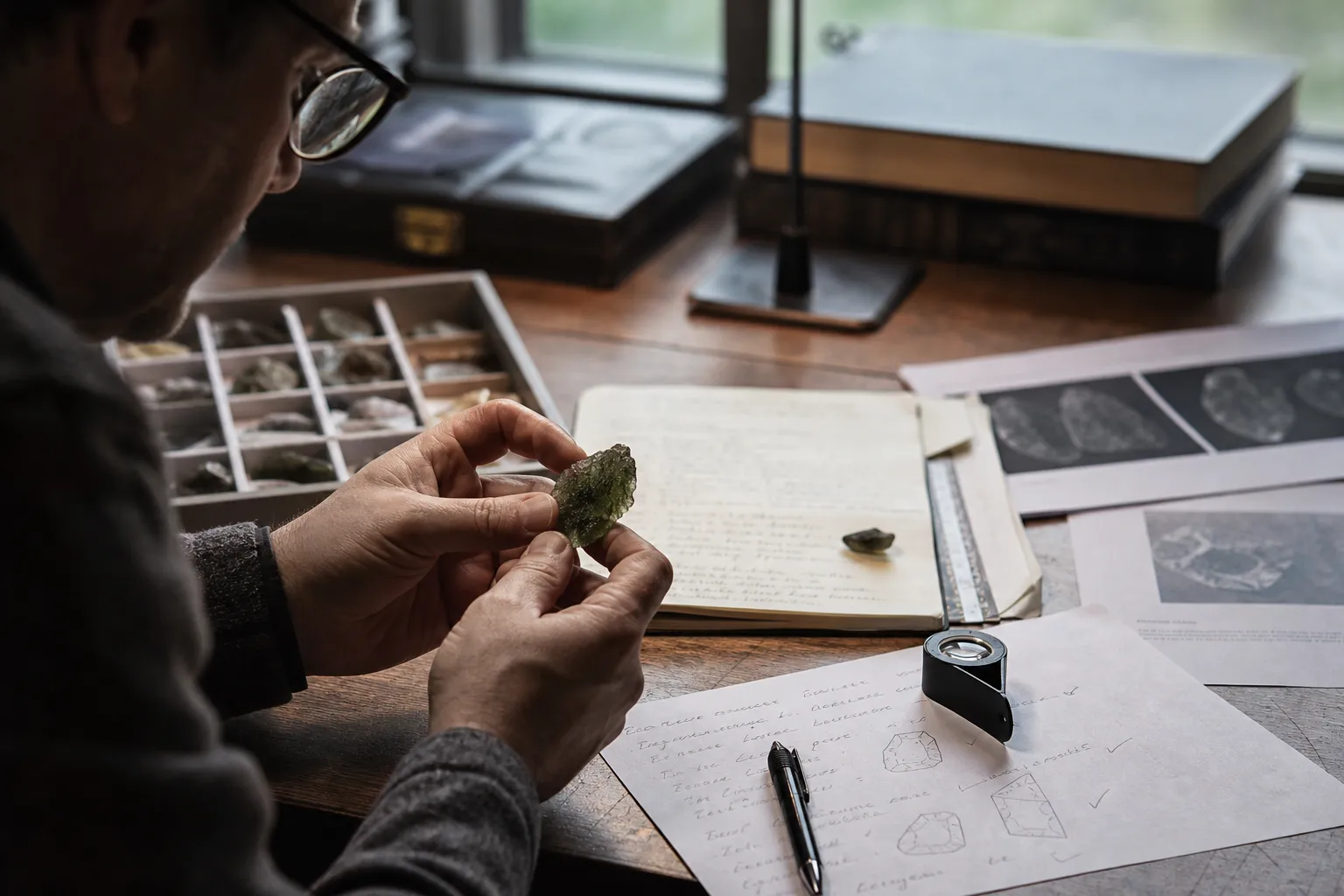
broader context
Broader moldavite archive
This narrower page makes more sense after the broader moldavite archive page.
What collectors can take from it right now
Collectors can treat the claimed conference summary as a prompt for verification, not as a finished conclusion.
A line such as “new research was presented” or “academic trends are shifting” does not tell you whether a specific moldavite specimen is genuine, where it came from, or whether its price should change. To carry that kind of weight, the claim would need traceable documentation.
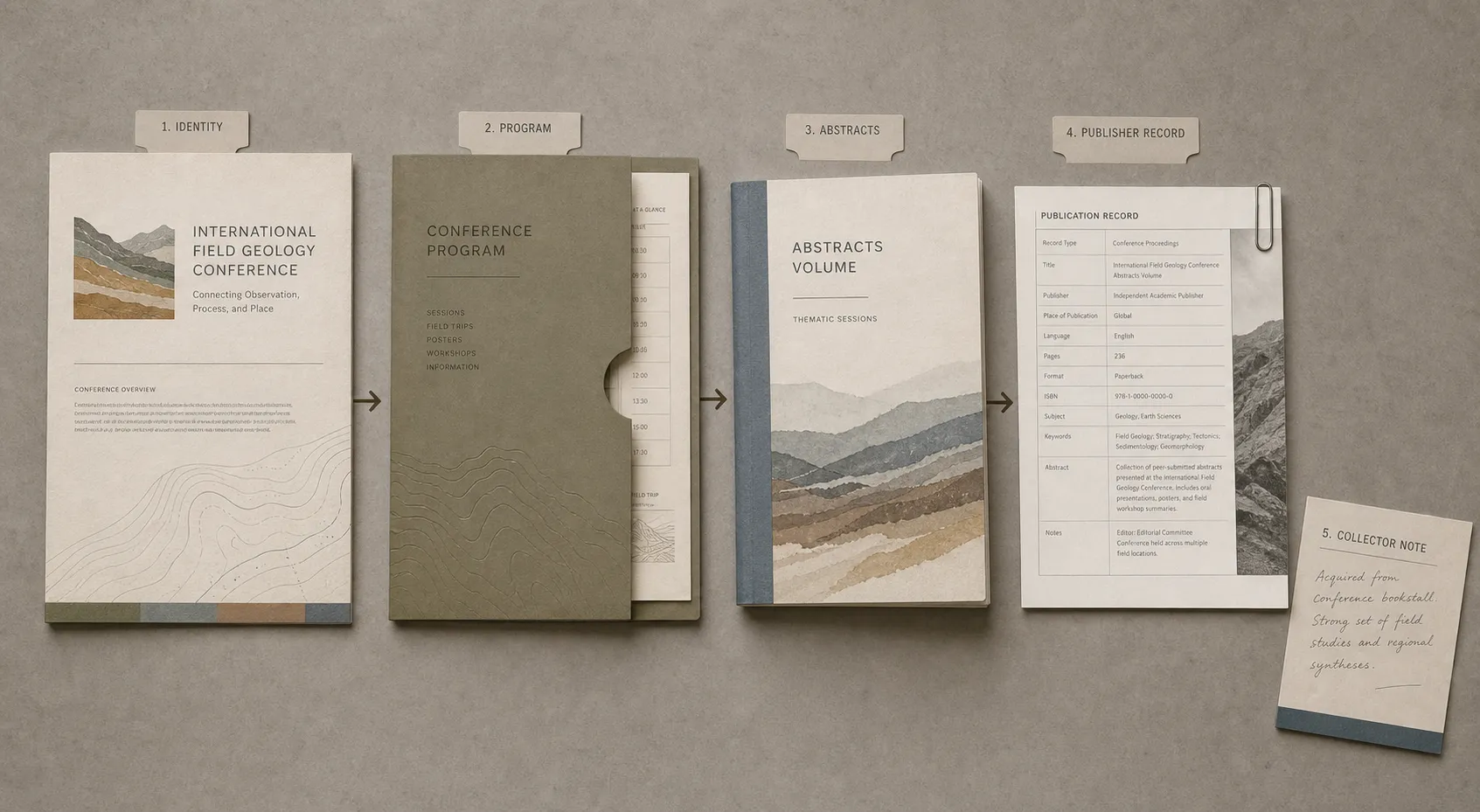
The strongest conference-related evidence would normally include
- Official conference pages confirming the name, date, organizer, venue, and scope.
- Program PDFs listing sessions, speakers, field trips, and presentation titles.
- Abstract books showing what was actually presented.
- Geological conference proceedings or special issues with full papers or extended summaries.
- University, museum, or research institute pages explaining related work.
- Publisher records for scientific papers, abstracts, or proceedings volumes.
- Clearly authored firsthand reports with dates, specific observations, and links back to primary material.
None of those source types are available here. Because of that, this article cannot say that the claimed 2025 event produced a new moldavite authentication method, a revised tektite model, a Ries crater breakthrough, a collector grading framework, or a market-moving discovery.
The collector-safe reading is simpler: if documentation appears later, it may help explain current research themes in impact geology. Until then, the claimed takeaways should not be used in buying, selling, grading, or provenance arguments.
Which conference outputs would matter most
Not all conference material does the same job.
Program PDF
A program PDF can confirm that a topic was scheduled. It may show whether a session involved impact craters, tektites, glass formation, geochemistry, museum communication, regional geology, or fieldwork. It does not usually provide enough detail to apply a claim to individual specimens.
Abstract book
An abstract book carries more weight. Abstracts usually summarize the research question, material, method, and early conclusion. For collectors, that can clarify whether a presentation was about formation history, analytical technique, crater structure, museum interpretation, or something else. Still, an abstract is not a full paper, and it may leave out limits that matter outside the academic setting.
Proceedings and scientific papers
Proceedings, special issues, and publisher-hosted scientific papers are stronger again because they can be revisited and cited. They make it easier to separate an actual research claim from a simplified retelling. Even then, a paper about impact processes is not automatically an authentication guide for loose moldavite specimens.
Institutional pages
Institutional pages from universities, museums, or research institutes can also help. They may confirm who is involved, what project is being discussed, and how a topic is being explained to the public. Their role is often communication, not final proof.
Firsthand attendance report
A firsthand attendance report can be useful only when it is specific. “Someone said moldavite prices will rise” is not evidence. “A named attendee summarized a session and linked the program” is more useful, though still secondary.
How documented findings could help collectors
If relevant sessions or papers are later confirmed, the collector value would likely be educational rather than immediately transactional.
A documented impact research session might help collectors understand how crater studies, melt materials, glass chemistry, or regional geological context are being discussed. That can improve the language collectors use when distinguishing moldavite from unrelated green glass or loosely described “impact stones.”
A documented museum or university communication project could matter in another way. Museums and universities shape public understanding through maps, labels, images, lectures, exhibitions, and field-trip material. If a Nördlingen-related program later shows renewed interpretation of the Ries impact structure, that could help place moldavite within the wider impact-material conversation. It would not authenticate a specimen by itself.
A documented paper on analytical methods could also be relevant, but only within its own scope. If a paper discusses laboratory techniques used in impact-glass research, collectors should not turn it into a home test unless the paper clearly supports that use. Scientific papers are usually written for researchers, not retail listings.
A proceedings volume could show future research trends, but trends are not guarantees. They show where questions are being studied, not which collector claims are settled.
That distinction matters because moldavite collecting sits between geology, symbolism, and commerce. A conference can strengthen the geology side. It should not be stretched into claims about personal outcomes, investment performance, or specimen certainty.
Common misunderstandings
Conference mention is not consensus
One common mistake is treating a conference mention as a consensus statement. A presentation can be serious and useful without being the final word. Conferences often include early findings, field reports, specialized debates, and work that changes later in print.
Place name is not a moldavite claim
Another mistake is treating the place name as a moldavite claim. Nördlingen is closely associated with the Ries impact structure, but a conference connected to that region would not automatically be about moldavite. Impact research may cover crater geology, shock metamorphism, ejecta, glass formation, geochronology, museum interpretation, or field excursions. The actual session title matters.
Academic attention is not market movement
A third mistake is assuming academic attention creates market movement. Visibility is not valuation evidence. Price, rarity, provenance confidence, and collector demand depend on many factors outside a conference program.
Research language is not a simple authenticity rule
A fourth mistake is converting research language into simple authenticity rules. A paper may discuss chemistry, formation environment, or impact processes, but that does not mean a buyer can identify a genuine specimen from color, bubbles, shape, surface texture, or a short listing description.
Finally, personal or spiritual language should not be treated as conference evidence. Collectors may have their own symbolic associations with moldavite. A geological conference, if documented, would support geological context, not personal outcome claims.
A quick verification route
Before repeating a claimed takeaway, keep the claim attached to the source that can support it.
- Start with the official conference identity. Confirm the name, year, host, location, and organizer through an official page or institutional listing. If those basics cannot be verified, do not build a collector conclusion on the summary.
- Next, look for the program. If the claim involves moldavite, tektites, impact glass, Ries crater research, or museum communication, the program should show a relevant session, title, speaker, field trip, or public lecture.
- Then look for an abstract book. This is where the claim should become more specific. The abstract should show what was studied, what question was asked, and how limited the conclusion is.
- After that, check proceedings or publisher pages. Full papers can clarify methods, data, uncertainty, and scope. If there are no proceedings yet, that does not make the research invalid, but it does limit what a collector can responsibly cite.
The simplest test is this: can you point to the exact page, title, author, and claim? If not, the takeaway is not ready to guide a collector decision.
What the evidence gap does not mean
The current evidence gap does not prove that no 2025 Nördlingen conference happened. It also does not prove that no useful papers, posters, field trips, or research themes exist. It only means this page has not been supplied with citable public documentation that can verify them.
That difference matters. A careful collector should avoid both extremes: accepting every academic-sounding rumor, and rejecting every mention because documentation is not immediately visible. The better position is conditional. Treat the claim as unverified until the conference outputs can be checked.
The gap should not be filled with commercial pages, forum posts, short social updates, or generic summaries. A sales listing may borrow geological language or imply that a conference changed collector understanding. Unless it links back to reliable conference or institutional material, it cannot carry the factual load.
Nor should one unverified summary be used to invent future research trends. Trends require patterns across programs, abstracts, papers, or institutional projects.
Bottom line for collectors
Treat the claimed 2025 Nördlingen conference summary as unverified until official conference pages, program PDFs, abstract books, proceedings, institutional communications, or publisher records can be checked.
If those sources later show relevant impact research, they may help collectors understand terminology, research themes, and geological context. They still should be read within scope: geological conference outputs can inform collector understanding, but they do not automatically establish authenticity, provenance, value, market direction, or personal meaning.
For now, the key takeaway is not a new rule about moldavite. It is a reading discipline: do not let academic-sounding language outrun the document it came from.