Moldavite shape acoustics
Does Shape Matter? The Correlation Between Moldavite Forms and Acoustic Vibration
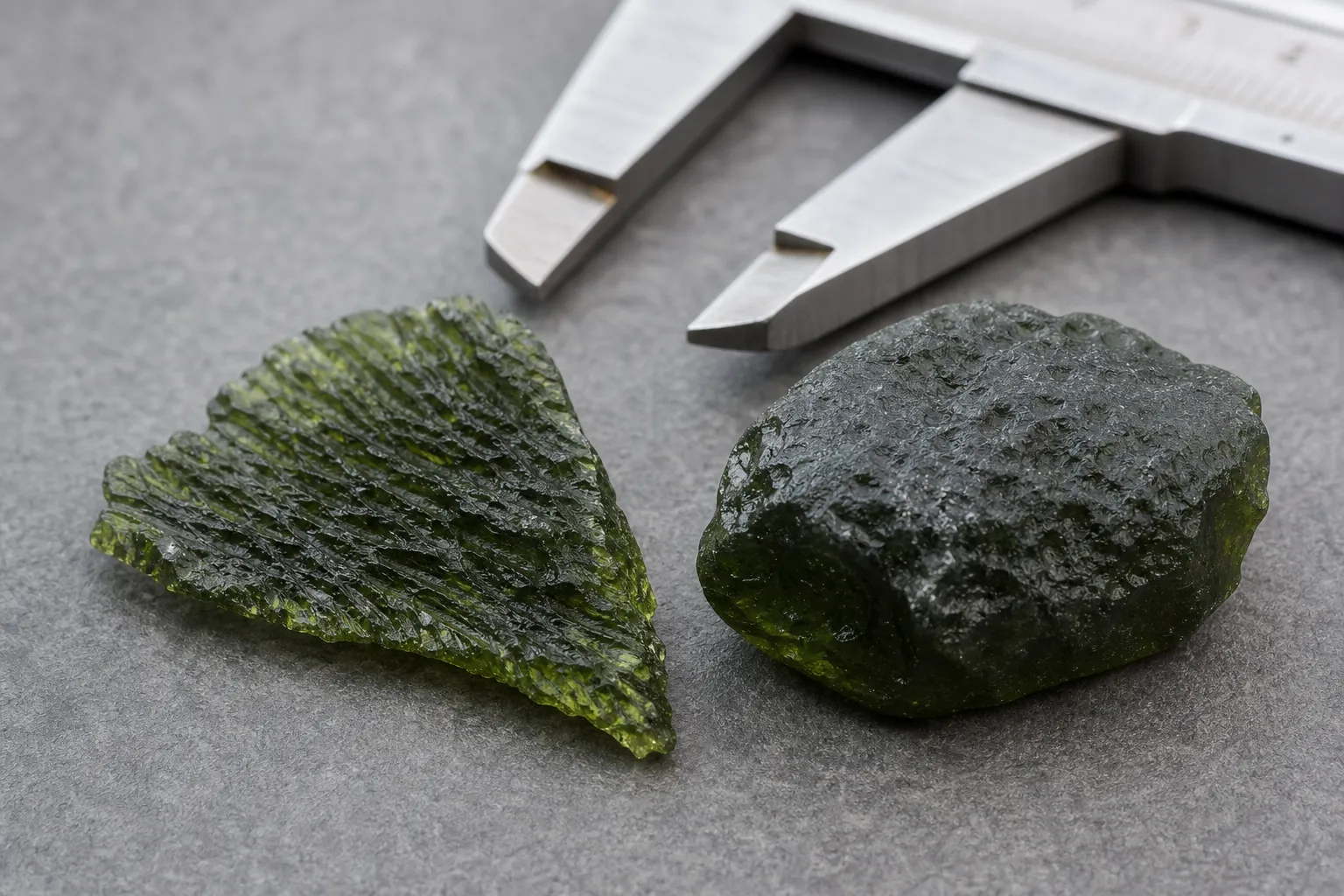
A thin, ridged moldavite fragment can seem as if it should sound different from a thicker, rounded specimen. In a broad physical sense, shape can matter: thickness, mass distribution, contact surface, cracks, and mounting conditions can all influence how a solid object vibrates or dampens sound.
That is the cautious answer behind Moldavite shape acoustics. Shape may affect sound behavior, but the available page evidence does not establish a Moldavite-specific acoustic rule. It does not show that one form always rings differently from another, and it does not make sound a reliable test for authenticity, energetic quality, or internal stress.
broader context
Start with the main moldavite page
This narrower page makes more sense after the broader moldavite archive page.
What Shape Can Plausibly Change
Collectors often describe moldavite through visible form: splash-like pieces, etched surfaces, delicate edges, thicker chunks, small chips, and jewelry-mounted stones. Those traits may change how a specimen responds when it is touched, moved, or held against another surface. That is not unique to moldavite; it is ordinary object behavior.
The more precise term is physical form, not shape as a mystical category. A specimen’s outline, thickness, weight balance, and contact points affect how vibration moves through it and how quickly that vibration is damped. A broad, thicker piece may behave differently from a thin, blade-like fragment because the material is arranged differently. A mounted pendant may sound different from a loose piece because the metal setting, cord, or adhesive changes the conditions around it.
So a physical form correlation is plausible, but only in a limited sense. The evidence available here does not include controlled comparisons of moldavite shapes, measured frequencies, repeatable tap tests, or laboratory acoustic data. Form can affect vibration in many materials; moldavite-specific sound behavior remains unverified.
That boundary matters because moldavite attracts two languages at once. One is material: glass, tektite, surface, crack, edge, mass, contact. The other is symbolic: vibration, intensity, transformation, presence. Those languages can coexist in collector culture, but they are not the same kind of evidence. A physical sound is not proof of symbolic meaning.
The Variables Behind Moldavite Shape and Sound
If two moldavite pieces seem to respond differently to light contact, shape may be only one part of the reason. The better question is what physical conditions could be changing the sound.
Thickness
Thinner tektites may seem more responsive because less material is involved and the form can be more delicate. Still, there is no reliable rule that thinner moldavite always rings, buzzes, or vibrates differently. Thickness interacts with length, curvature, surface texture, hidden damage, and the way the piece is held.
Mass distribution
A compact piece with weight concentrated near the center will not behave like a long, uneven fragment with one narrow end and one thick end. Sound behavior depends on how vibration travels through the object, not only on the seller’s shape label.
Surface contact
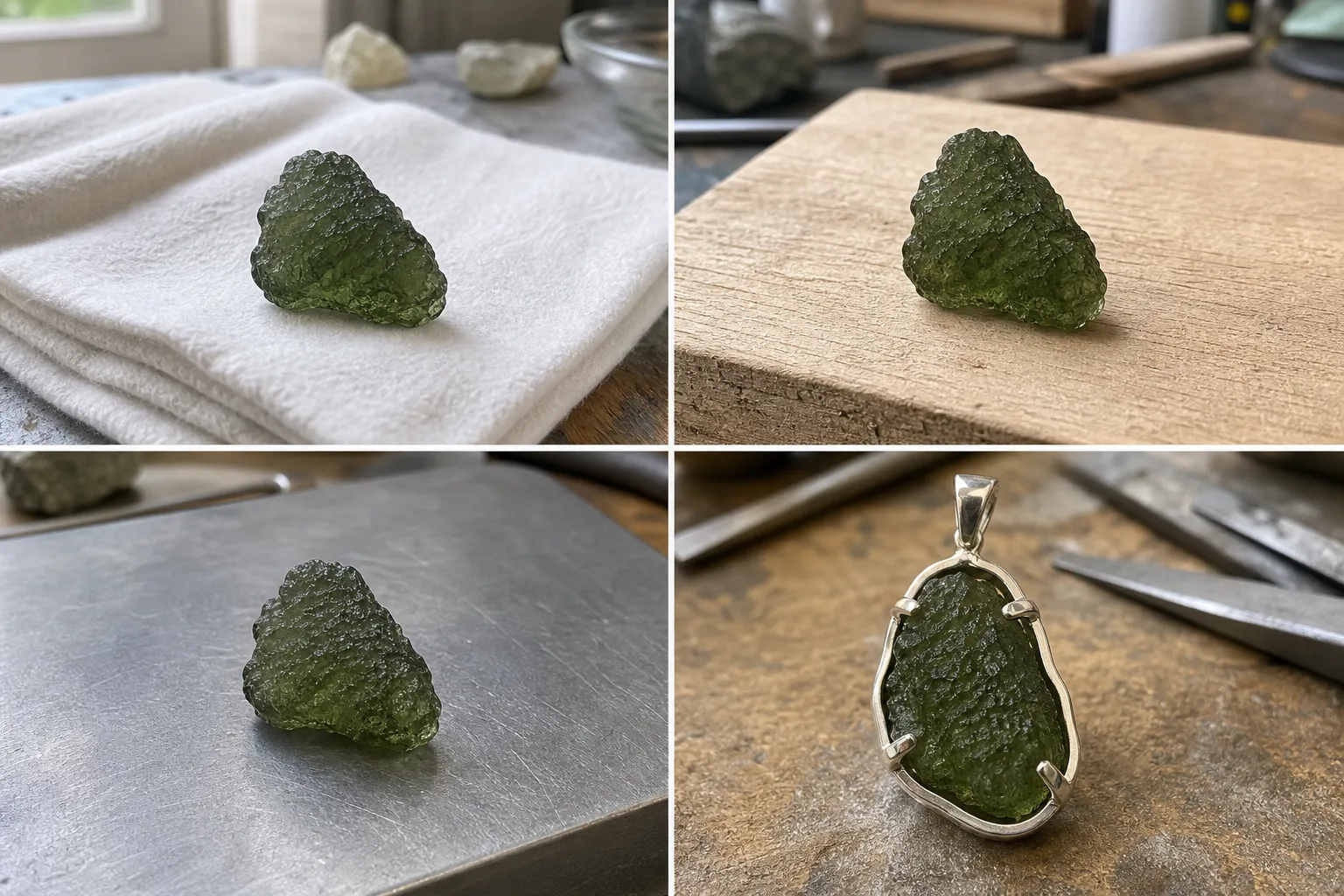
A specimen resting on cloth, skin, wood, glass, or metal may produce different audible effects because the supporting surface absorbs or transfers vibration differently. A piece pinched between fingers may sound muted. A piece resting lightly on a hard surface may sound sharper. A bezel-set pendant may be damped by the setting. These are contact effects, not proof of a special acoustic identity.
Cracks and chips
Visible fractures, small breaks, fragile ridges, and thin edges can change how vibration moves through a specimen, and they also make informal sound comparisons risky. Internal stress is sometimes mentioned in casual discussions of glassy objects, but it should not be inferred by tapping or listening. That moves beyond the evidence available here.
Mounting conditions
A loose specimen, wire-wrapped pendant, drilled bead, and glued setting are not the same acoustic situation. The mount may constrain movement, absorb vibration, add its own sound, or mask the specimen’s response. If a mounted piece sounds duller than a loose one, the setting may be the reason.
What the Evidence Does Not Let Us Claim
The key boundary is simple: there is no verified moldavite acoustic signature in the supplied research package. That means several popular shortcuts should be avoided.
Shape alone does not prove authenticity. A moldavite piece may have convincing visual traits and still require provenance and careful inspection. A ring, click, dull response, or faint vibration is not enough. The reverse is also true: a piece should not be rejected only because it does not match a casual expectation of how moldavite should sound.
Sound does not prove energetic strength. Many readers use the word vibration because moldavite is surrounded by transformational and spiritual language. That language can describe personal meaning or symbolic interpretation, but it should not be treated as physical acoustic evidence. A louder, sharper, softer, or more muted sound should not become a claim about spiritual power.
Shape also does not reveal internal stress in any reliable casual way. Internal stress in glassy material is a technical matter, not something to read from a quick tap. Without appropriate method and evidence, listening for stress becomes folklore rather than collector literacy.
The question is still useful; it just has a narrower answer. Moldavite shape evidence can support cautious physical reasoning about object form and vibration. It cannot support a fixed rule for identification, value, or symbolic intensity.
Why Casual Tapping Can Mislead
Collectors sometimes want a quick comparison: hold two stones, touch them lightly, and listen. The impulse is understandable. Sound feels immediate, and differences can be easy to notice. For moldavite, though, casual listening is a poor path to certainty.
The hand changes the result. A specimen held tightly may be damped before it produces much sound. The same piece held loosely, resting on a surface, or touching a metal setting may seem different. That difference may come from handling, not from the moldavite itself.
The object making contact changes the result too. A fingernail, ring, another stone, metal tool, or tabletop can introduce its own sound. What the ear hears may be a mix of contact noise, surface vibration, and the object used to touch it. Without controlled conditions, the comparison is unstable.
Fragile forms also deserve restraint. Thin edges, sculpted ridges, chips, and existing cracks can be damaged by forceful handling. No acoustic curiosity justifies stress-testing a specimen. If sound is noticed informally, it should remain gentle and non-diagnostic. The safer habit is visual inspection, provenance review, and conservative handling.
Expectation can shape interpretation. If someone has been told that a “real” piece should ring, or that a certain form carries a stronger vibration, ordinary differences may start to feel meaningful. Collector judgment works better when specimen traits come before seller language.
A Practical Way to Read Moldavite Acoustic Claims
When a seller, forum post, or social caption links moldavite shape and sound, slow the claim down. Ask what kind of statement is being made.
A cautious statement says that form may influence how a specimen responds to contact because thickness, mass distribution, surface contact, cracks, and mounting can affect solid-object vibration. That is a limited physical explanation.
A stronger claim needs stronger evidence. If someone says a certain moldavite shape always produces a specific tone, that sound proves authenticity, or that a particular acoustic response confirms energetic quality, the claim has moved beyond what this page can support. It may be a belief, sales phrase, or anecdote, but it should not be treated as established moldavite evidence.
A useful collector question is not “What should moldavite sound like?” It is “What else could be causing the sound I hear?” The answer may be thickness, the resting surface, the way the piece is held, a crack, a jewelry mount, or the object touching it. Once those variables enter the picture, sound becomes too dependent on conditions to stand alone.
An acoustic observation can still be interesting. It describes one object, in one handling situation, under one set of contact conditions. It is local evidence, not a general rule.
Where Shape Matters Most
Shape matters most when it changes the physical conditions of vibration. A thin edge, uneven weight, broad resting surface, narrow contact point, visible crack, or restrictive mount can all plausibly alter sound behavior. These are ordinary material considerations, not moldavite-specific proof.
Shape matters less when it is used only as a label. Form terms can help with visual sorting, but they do not automatically predict an acoustic result. Two specimens with similar outlines may differ in thickness, damage, setting, and contact surface. Two pieces with different outlines may sound more similar than expected if they are held or mounted in similar ways.
Shape matters least when it is asked to carry claims about authenticity or transformation. Moldavite’s impact history and collector value belong with geology, provenance, and careful inspection. Its symbolic meaning belongs in bounded interpretation. Sound alone should not be asked to prove either one.
The best answer is restrained: Moldavite shape and sound can be related in a plausible physical sense, but the relationship is conditional, not diagnostic. The available evidence supports caution, not certainty.
Short FAQ
Can moldavite shape affect acoustic vibration?
Yes, plausibly, in the general way that physical form can affect object vibration. Thickness, mass distribution, contact points, cracks, and mounting conditions may all change sound behavior. This does not establish a Moldavite-specific acoustic rule.
Do thinner tektites always sound different?
No reliable rule is supported here. Thinner forms may behave differently in some situations, but sound also depends on size, contact surface, handling, damage, and mounting. “Thinner” is only one variable.
Can sound prove moldavite is real?
No. Sound should not be used as an authenticity test. Moldavite judgment should rely on provenance, specimen traits, and careful inspection rather than a ring, click, or vibration claim.
The Bottom Line
Shape can matter, but not in the simplified way moldavite folklore sometimes suggests. Physical form may influence acoustic vibration because solid objects respond differently depending on thickness, mass distribution, contact, cracks, and constraints. That is the grounded part.
The unsupported leap is from “shape may affect sound” to “moldavite has a reliable sound code.” This page does not support that leap. Treat Moldavite acoustic vibration as an interesting observation, not a verdict; keep provenance, inspection, and restrained interpretation in view.