Direct answer
The 2026 Geraisites Discovery: Will Brazilian Tektites Rival European Moldavite?
Not yet. Based on the supplied research set, the claimed Geraisites tektite 2026 story does not have enough verified public evidence to be compared responsibly with European Moldavite.
That does not mean a Brazilian tektite discovery is impossible. It means the core facts are still unverified: whether the material is documented, whether it is actually a tektite, whether it comes from Brazil, whether its chain of custody can be followed, and whether it has any real effect on the gem supply chain.
The appeal is easy to see. Moldavite combines impact-glass geology, Central European provenance, collector mythology, and a market shaped by limited known sources. A documented Brazilian impact glass would be exciting. But at this stage, “Geraisites” should be treated as a conditional discovery name, not as an established Moldavite rival.
broader context
Broader moldavite archive
This narrower page makes more sense after the broader moldavite archive page.
What Would Need to Be Proven First
A new tektite claim has to clear more than one hurdle.
Material identity
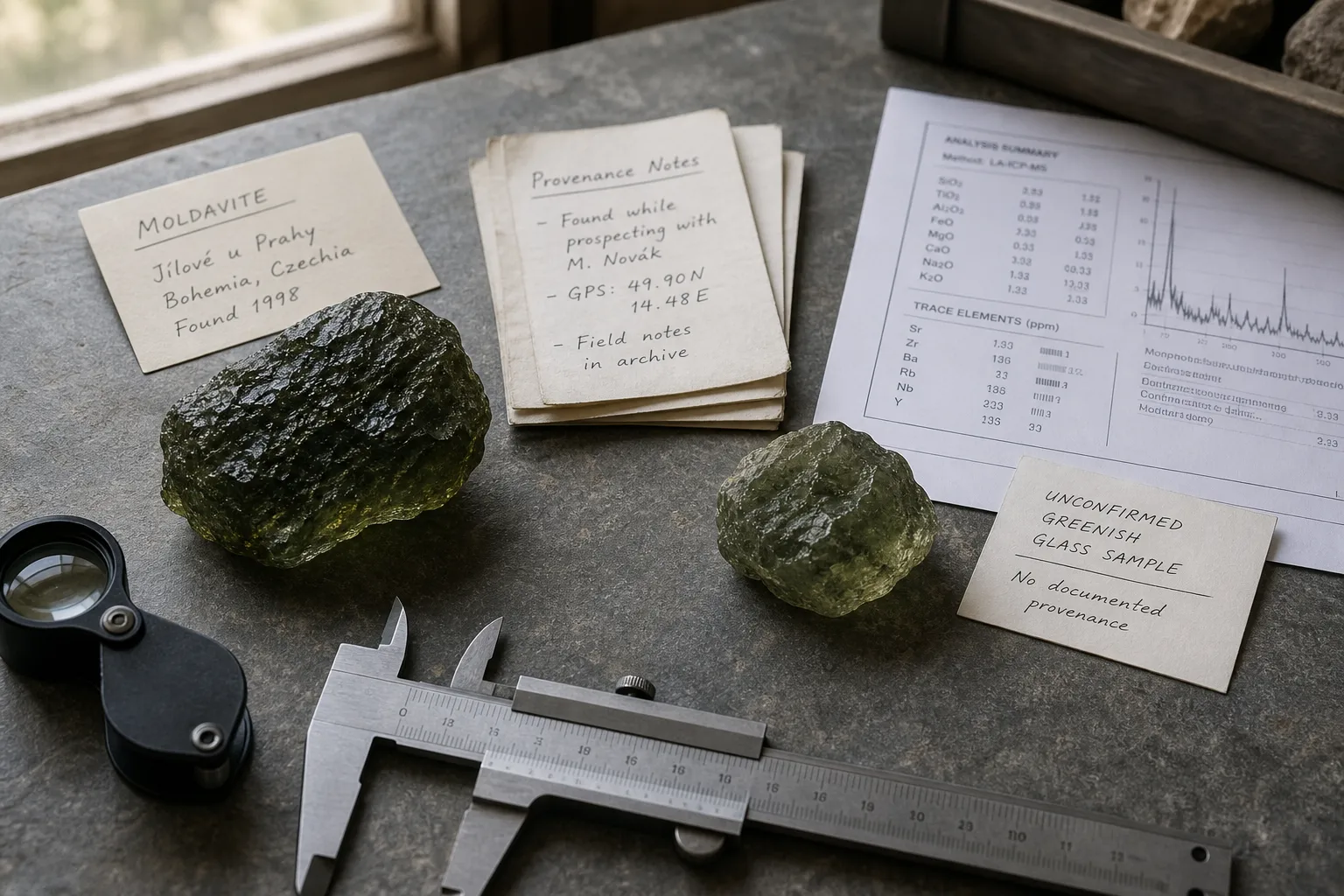
The material itself would need independent geological work. A glassy texture, greenish color, unusual surface, or dramatic origin story is not enough. Tektite verification would require mineralogical and geochemical evidence, not only seller descriptions or collector enthusiasm.
Brazilian provenance
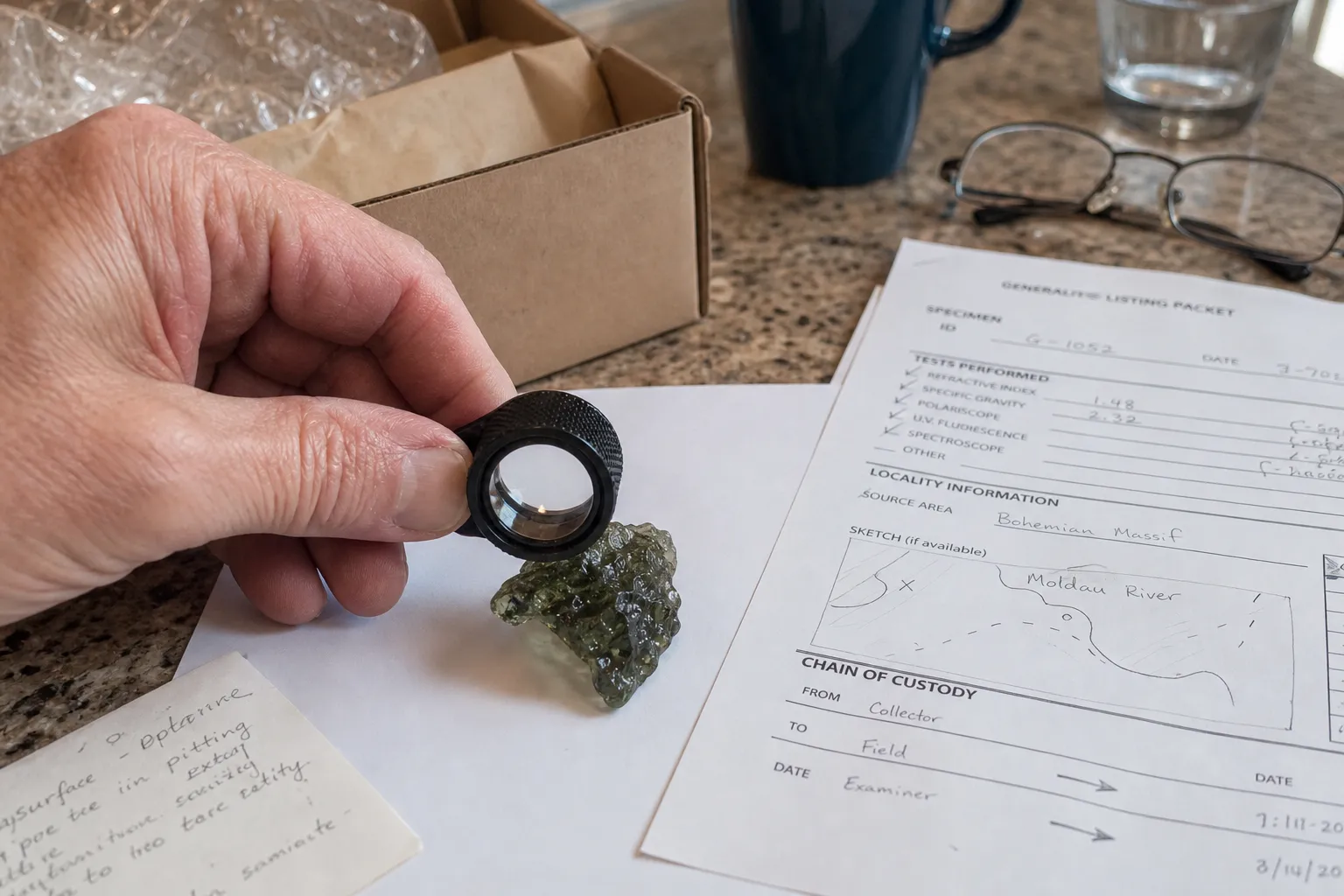
The Brazilian provenance would need documentation. A credible origin story would include a specific locality, collection context, relevant permissions where applicable, and a chain of custody connecting studied specimens to the claimed source.
Public visibility
The discovery would need public visibility outside promotional channels. A claim with real geological or market significance should eventually appear in checkable records: laboratory reports, institutional notes, museum or university references, transparent collector documentation, or similar sources. In the supplied material for this page, those sources are not present.
Repeatable pattern
The pattern would need to be repeatable. One attractive specimen or one circulating phrase does not establish a new tektite field. If multiple pieces are claimed, they should show a consistent geological signature, a coherent locality story, and a traceable path from field collection to analysis.
Until those pieces are visible, Geraisites discovery claims remain claims.
Why the Moldavite Comparison Is Premature
Moldavite is not simply “green impact glass.” Its collector identity rests on recognized Central European source context, long-standing attention, and a market with its own history.
For a new material to rival Moldavite, it would need evidence on several levels:
Scientific identity
Independent support that the material is a tektite or impact-related glass, not natural glass, manufactured glass, slag-like material, or a misidentified stone.
Provenance
A documented Brazilian origin that can be followed through collection, analysis, and market movement.
Availability
Enough transparent supply to show whether it is a one-off curiosity, a small occurrence, or a recurring gem and mineral material.
Demand behavior
Collector interest over time, not only early excitement, speculative wording, or novelty pricing.
The current evidence does not support those steps. That makes “rival Moldavite” a market phrase rather than a grounded conclusion. It may express possibility or aesthetic appeal, but it should not be read as evidence of equal geological status, equal desirability, or similar price behavior.
This distinction matters because Moldavite’s appeal often blends science, collecting, symbolism, and rarity language. A possible Brazilian tektite story naturally attracts attention. But the emotional pull of the story cannot replace verification.
The Market Questions Are Even Less Settled
Claims about macro-economics or supply-chain impact require a much larger evidence base than is currently available.
For Geraisites, the supplied research does not confirm production volume, wholesale channels, a mine-to-market route, stable price history, or any public record showing an effect on Moldavite economics.
A real supply-chain impact would require visible signs: enough material entering the gem supply chain to be noticed beyond isolated claims, consistent distinction from other glasses or stones, pricing that reflects more than novelty, and documentation that travels with specimens.
Without those signs, it is too early to say that a Brazilian material could change Moldavite demand or pricing. Moldavite already has its own market pressures: authenticity concerns, locality interest, specimen quality, carving and jewelry demand, and collector preference for documented origin. A new discovery name does not automatically create a parallel market.
This is where investment-style language becomes risky. A name can make a material sound scarce before scarcity is documented. Early listings can look important before authenticity and provenance are checked. “New Moldavite” wording can suggest value before the comparison has been earned. For now, the market significance of Geraisites remains unconfirmed.
Common Confusion Around “Geraisites”
Treating a name as evidence
The biggest confusion is treating a name as evidence. “Geraisites” may sound like a formed category, but a category name does not prove a verified tektite identity.
Treating Brazil itself as proof
Brazil has rich and varied geology, so a Brazilian provenance story may feel plausible. But the question is not whether Brazil can contain interesting geological materials. The question is whether this specific claimed discovery has been documented well enough to support tektite classification and Moldavite comparison.
Treating resemblance as equivalence
A glassy look, dramatic surface, or appealing color does not make a material comparable to Moldavite. A serious comparison would look at origin, chemistry, formation context, documentation, and collector-market behavior.
Assuming early scarcity means long-term rarity
If only a few pieces are visible, the material might be rare. It might also mean the supply story is incomplete, the locality is unclear, or the claim has not moved beyond early circulation.
A Practical Evidence Check for Readers
If you see a Geraisites listing, article, video, or collector discussion, the useful question is not “Could this be the next Moldavite?” The better question is: “What evidence is being offered?”
A stronger claim
A stronger claim would identify who examined the material, what tests were used, where the specimens were collected, how custody was preserved, and whether the findings can be checked outside a sales environment.
A weaker claim
A weaker claim leans on phrases such as “new Brazilian Moldavite,” “2026 discovery,” “rare tektite,” “major supply-chain impact,” or “investment opportunity.” Those phrases may show how the material is being promoted, but they do not establish geological identity or market significance.
Collectors do not need to dismiss every emerging claim immediately. New finds can start with incomplete documentation. But there is a difference between watching a story develop and treating it as settled. For now, Geraisites is best understood as a term to monitor, not a verified Moldavite rival.
What Could Change the Answer
The answer could change if credible public evidence appears. A documented laboratory report, an institutional geological note, transparent locality records, and consistent specimen data would make the scientific side stronger. Independent confirmation would matter more than repeated sales language.
The market side would need separate evidence. If documented material entered recognized gem and mineral channels, provenance records became consistent, and collector demand could be observed beyond novelty claims, then discussion of market significance would become more reasonable.
Even then, “rival Moldavite” would need a clear meaning. Rival in geology, visual appeal, rarity, price behavior, symbolism, or supply-chain impact? Those are different claims.
For now, the narrow answer is the most accurate one: the supplied research does not verify a 2026 Brazilian tektite discovery called Geraisites, its Brazilian provenance, its tektite classification, Moldavite-level desirability, or any macro-economic effect on the gem supply chain. Moldavite-curious readers can follow the story, but the comparison should remain conditional until the evidence becomes visible, independent, and specific.