Moldavite color evidence
Chlum vs. Radomilice: Decoding the Chemistry of Color
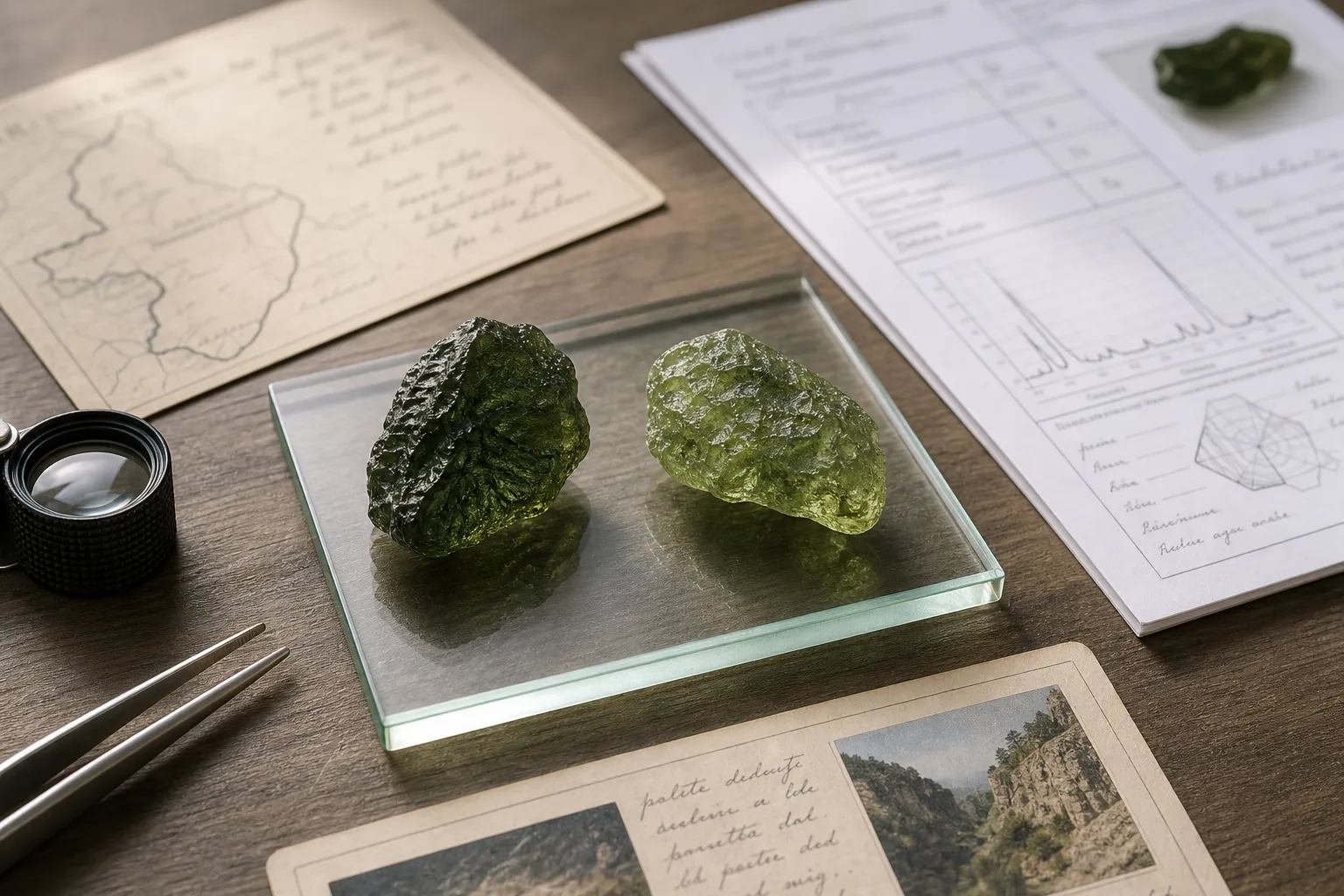
If you are comparing Chlum and Radomilice through Moldavite Colors, the careful answer is simple: color names such as “olive green” for Chlum or “apple green” for Radomilice are collector-facing descriptions, not confirmed chemical fingerprints.
The available material for this page does not verify that either locality consistently produces one specific shade. It also does not confirm that an Fe/Mn ratio explains a Chlum-versus-Radomilice color difference. Those phrases can still be useful, but only as language for describing what people see and how listings are written. They should not be used alone to establish origin, authenticity, chemistry, or value.
Moldavite color interpretation works best when three things stay separate: what the eye sees, what a seller or collector claims, and what documented geochemical analysis can actually support.
broader context
Start with the main moldavite page
This narrower page makes more sense after the broader moldavite archive page.
Color Can Describe a Piece, But It Cannot Identify the Locality
When readers compare Chlum Radomilice colors, they are usually asking whether a certain green shade points to a specific source area.
On the evidence available here, the answer is no. A label such as olive green, apple green, yellow-green, brownish green, bottle green, or bright green can describe appearance. It cannot stand as a locality test by itself.
“This specimen looks olive green”
This is a color description.
“This specimen is from Chlum”
This is a locality claim that needs documentation.
“This Chlum color comes from a specific Fe/Mn ratio”
This is a chemistry claim that needs reliable analytical support.
“This shade verifies authenticity”
This asks too much from color alone.
That distinction is the core of the page.
Why “Olive Green vs Apple Green” Sounds Convincing
The olive green vs apple green comparison is easy to remember. Olive green suggests a darker, earthier, sometimes more subdued tone. Apple green suggests a brighter, fresher shade. In collector language, those words help people talk quickly about small pieces, backlit fragments, and online photos.
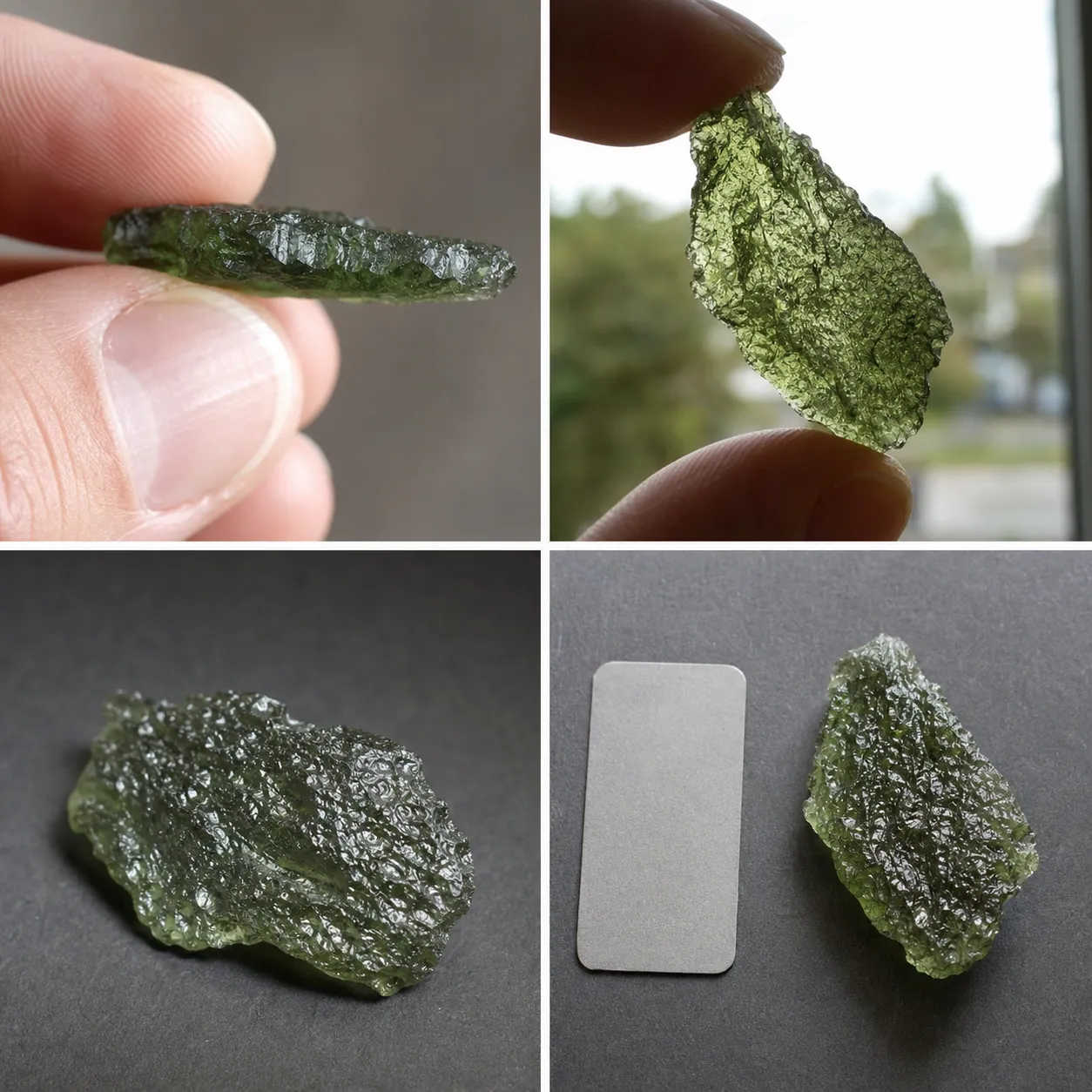
But Moldavite is natural glass, not a paint sample. A piece can look different depending on thickness, lighting, surface texture, translucency, camera exposure, background color, and whether it is viewed in hand or through a screen.
A thin edge may look brighter than a thicker area of the same specimen. A deeply textured surface can scatter light and make the color seem darker or more complex. A white-background listing photo can make one piece look brighter than the same piece under warm indoor light.
So the useful question is not “Does apple green mean Radomilice?” It is: “Who is making the Radomilice claim, what supports it, and is color being used as description or evidence?”
Where Chemical Composition Belongs
Moldavite chemical composition is a real subject, but it needs a narrower claim than many casual explanations give it. A serious composition discussion may involve major elements, minor elements, trace elements, glass structure, documented samples, and comparison across known material.
For this specific Chlum-versus-Radomilice question, no usable source supplied for this page confirms a locality-specific chemical pattern. That means this article should not say that Chlum has a known chemistry that creates olive green while Radomilice has a known chemistry that creates apple green.
The defensible statement is smaller: chemical composition may matter to Moldavite color in a broad scientific sense, but this page does not have the evidence needed to assign these two locality color labels to specific compositional causes.
That boundary matters because “chemical composition” can make a market phrase sound settled. Unless the claim is tied to reliable mineralogical, geochemical, gemological, museum, university, or peer-reviewed material, it remains something to verify, not something to repeat as fact.
The Fe/Mn Ratio Claim Needs Extra Care
The Fe/Mn ratio claim is a more technical version of the color argument. It suggests that the relationship between iron and manganese explains why one Moldavite locality appears one shade and another appears another shade.
That may sound plausible because trace elements can affect color in minerals and glasses. Plausible, however, is not the same as verified. For this Chlum-versus-Radomilice comparison, the available material does not establish Fe/Mn ratio as the confirmed cause of an olive green versus apple green difference. It also does not provide a verified threshold, dataset, method, or sample comparison that a reader could use as a locality rule.
A careful page should avoid claims such as “Chlum is olive green because of its Fe/Mn ratio” or “Radomilice is apple green because of a different Fe/Mn ratio.” Those are causal statements, and they need stronger evidence than color descriptions or seller language.
A safer reading
- Fe/Mn ratio claims may appear in Moldavite color chemistry discussions.
- They should not be treated as confirmed locality explanations without strong source support.
- A chemistry claim needs more than a photograph, seller label, or repeated comparison.
- Even if chemistry is relevant, color alone is too broad a signal to identify locality.
How to Read Chlum and Radomilice Color Claims
When you see a Chlum olive green claim or a Radomilice apple green claim, first ask what kind of statement it is.
If it is only a visual description, it may be useful. A listing that says a piece has an olive cast is describing appearance, especially if the photos are clear and the wording does not treat color as origin evidence.
If it is a locality claim, the standard changes. A statement that a specimen is from Chlum or Radomilice should rest on provenance, field documentation, credible collection history, or other specimen-specific support. Color can be part of the conversation, but it should not carry the claim by itself.
If it is a chemistry claim, the standard rises again. References to chemical composition, Fe/Mn ratio, trace elements, or a specific scientific cause should be tied to reliable analytical sources.
Practical test
Remove the color word from the claim. If almost nothing remains, the argument is probably leaning too hard on color language.
What Can Change the Green You See
Even without a verified Chlum-versus-Radomilice chemistry rule, there are ordinary reasons a Moldavite piece may look more olive, more apple green, or somewhere between.
Thickness is a major variable. Thicker natural glass can appear darker because light travels through more material. A thin shard or edge may look brighter, especially when backlit.
Lighting changes perception too. Daylight, warm bulbs, cool LEDs, and photography lamps can all shift how green appears. A stone that looks muted in one setting may look livelier in another.
Surface texture also matters. Moldavite is often valued for etched, sculpted, irregular surfaces. Those surfaces create shadow, scatter light, and can make the same material look deeper or less uniform than a smooth transparent chip.
Photography adds another layer. White balance, editing, camera exposure, background, and screen calibration can make online color comparison unreliable. That is especially important because many locality color claims are first encountered through listing photos.
These factors do not mean locality has no relationship to appearance. They mean visible color is a mixed signal. Before turning shade into source, the claim needs evidence beyond the shade.
A Careful Collector’s Checklist
Use this checklist when a Moldavite color interpretation depends on Chlum, Radomilice, composition, or Fe/Mn language:
- Is the color word being used as description, or as evidence?
- Does the locality claim stand on documentation beyond shade?
- Is the chemistry claim tied to reliable analytical support?
- Are the photos taken in lighting that allows fair comparison?
- Does the seller or writer acknowledge uncertainty?
- Is one color being treated as an authenticity shortcut?
- Would the explanation still hold if the color label changed?
The main warning sign is overconfidence. A cautious description can be helpful. A sweeping claim that turns “olive” or “apple” into a fixed origin marker is much weaker.
The Boundary This Page Keeps
This page does not verify a fixed color map where Chlum equals olive green and Radomilice equals apple green. It also does not verify a specific Fe/Mn ratio explanation for those labels.
What it can do is give readers a cleaner way to read the language: Moldavite color labels describe appearance. Locality names are provenance claims. Chemical composition and Fe/Mn ratio are scientific claims that need stronger evidence. When those categories blur, a simple color comparison starts to sound more certain than it is.
For the narrow Chlum versus Radomilice color question, the best answer is restrained: notice the color, describe it accurately, but do not let it replace locality documentation or geochemical analysis.
Quick Questions
Can Moldavite color identify Chlum or Radomilice?
Not by itself. Color can describe a specimen, but the available material for this page does not support using shade as a reliable Chlum or Radomilice identifier.
Is “olive green vs apple green” a valid Moldavite comparison?
It can be valid as casual visual language. It becomes weak when used as evidence for origin, authenticity, value, or chemical cause without stronger support.
Should Fe/Mn ratio be ignored completely?
No. It can be treated as a chemistry question worth verifying. For this specific locality-color comparison, though, it should not be presented as a confirmed explanation unless reliable geochemical sources support it.