Sourcing boundary
The Environmental Toll of the Green Gold Rush in South Bohemian Forests
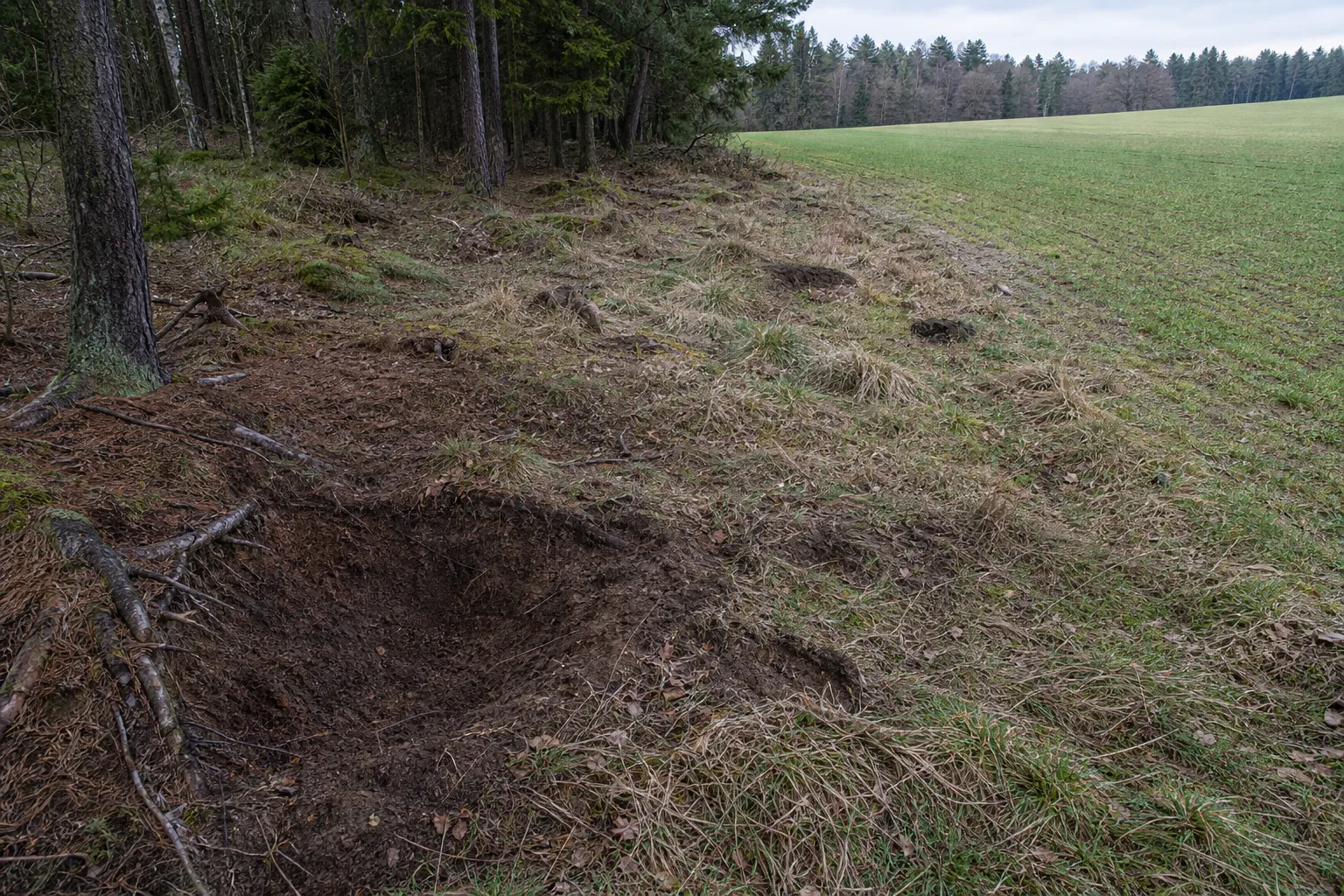
Moldavite’s “green gold rush” has left a real environmental mark in parts of South Bohemia. The best-supported concern is local land disturbance: pits, torn-up soil, damaged agricultural or forest-edge surfaces, and sites that need reclamation after moldavite digging.
That supports treating Eco-Devastation as a serious sourcing question, not just dramatic internet language. But the current public source base is narrower than many online claims. It does not, on its own, prove region-wide ecosystem destruction, current excavator damage across South Bohemian forests, biodiversity loss, water-system impacts, or confirmed environmental-law violations at named sites.
broader context
Moldavite context note
This narrower page makes more sense after the broader moldavite archive page.
What the local evidence actually shows
The strongest South Bohemian source available here is a university thesis on landscape protection and mineral-resource protection using moldavites as its case study. Its value is local and concrete, but its scope is limited.
The thesis discusses selected localities, including Zatáčka and Parýz near Dobrkovská Lhotka, and describes negative effects linked to illegal moldavite digging. Within that frame, the evidence supports cautious statements such as:
- Moldavite extraction has been associated with damage to land used as meadow, pasture, agricultural land, or forest units.
- At Parýz, post-mining damage reduced the usability of the area.
- At Zatáčka, reclamation after illegal mining is presented as a positive example because it helped stop further damage to agricultural land.
- The work connects the issue to landscape protection, mineral-resource protection, and legal context, but it does not map damage across all South Bohemian forests.
That distinction matters. “Selected moldavite sites show documented disturbance” is a credible claim. “South Bohemian forests are being destroyed as a whole” needs much stronger evidence.
A second university thesis, from Charles University, helps explain the social side of the problem. It looks at informal moldavite mining, digger groups, motivations, and bottom-up extractivism in South Bohemia. That is useful for understanding why digging continues and why the subject becomes emotionally charged. It should not be treated as an ecological survey measuring forest recovery, species decline, soil chemistry, or water impacts.
How moldavite digging can disturb forests and land
Moldavite is not simply picked up like fruit from the forest floor. It is searched for in deposits where digging, trenching, or heavier disturbance may expose material-bearing layers. When demand rises and “green gold” language turns small stones into treasure, the incentive to disturb land increases.
The clearest environmental concern is physical: holes, churned soil, damaged vegetation, altered surfaces, and land that becomes less usable or needs repair. In a forest or forest-edge setting, even a small disturbed area can matter. Soil holds roots, seeds, moisture, fungal life, and the structure that helps vegetation return.
Still, the wording needs care. The available sources support discussion of land damage, informal extraction, and reclamation needs at selected moldavite localities. They do not support a blanket claim of measured ecosystem destruction. Phrases such as “soil disturbance,” “landscape damage,” “site degradation,” and “reclamation need” fit the evidence better than claims about confirmed biodiversity collapse.
The same caution applies to excavators. Mechanized digging can be a serious concern in surface extraction, and moldavite damage is often discussed in that context. But the current citation pool does not include official records proving recent excavator incidents, fines, prosecutions, or mapped machinery damage across South Bohemian forests. A claim that excavators are currently damaging protected forests would need dated field documentation, forestry materials, local authority records, court or police records, or credible reporting tied to named places.
Why informal digging is harder to evaluate
Part of the moldavite problem sits outside the cleaner paper trail of regulated extraction. Formal extraction, at least in principle, can involve permissions, mining-area rules, fees, reclamation duties, environmental procedures, and public oversight. A Czech policy article on mineral-extraction royalties gives useful background on how extraction, public budgets, and environmental protection can be connected in the Czech system.
But legal context is not proof of a specific violation. A law can define duties; it does not automatically show that a particular pit was unlawful, that a specific landowner was harmed, or that a named site breached protected-area rules.
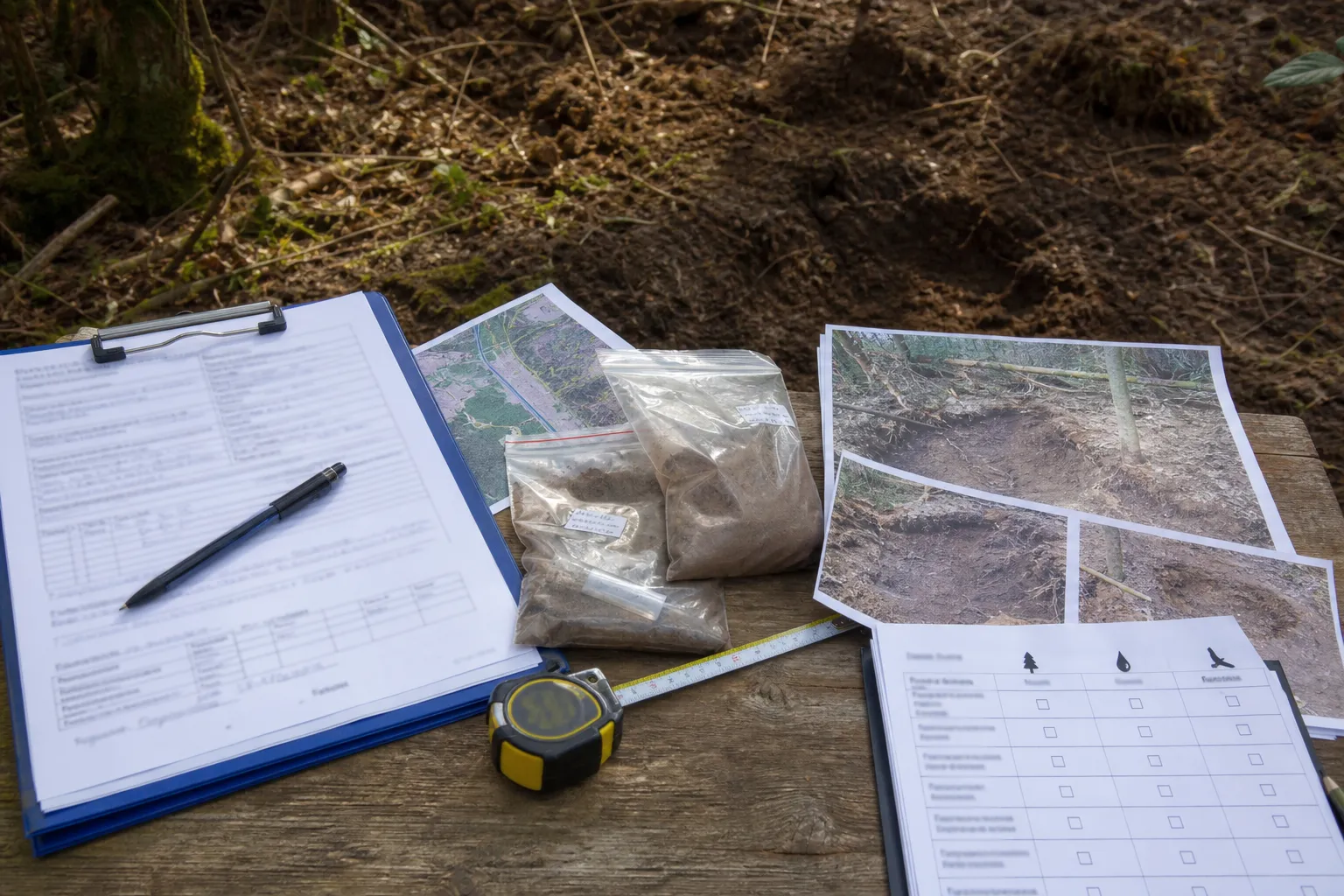
Informal digging is harder to document because it may leave visible damage without an easily available public case file. Locals may see pits, damaged ground, or abandoned extraction marks, but a responsible article cannot turn every unattributed photo or anecdote into verified evidence. The supported statement is narrower: South Bohemian academic work recognizes informal or illegal moldavite digging as a real social and landscape issue, and selected sites show documented disturbance connected to extraction.
Where “ecosystem destruction” goes too far
The phrase “ecosystem destruction” is understandable when a rare stone is marketed with beauty and mystique while the land it comes from may show scars. But the phrase should not be used as a shortcut.
A damaged locality can be environmentally serious without proving full ecosystem destruction. Soil can be opened, vegetation damaged, erosion risk increased, and natural regeneration disrupted in a particular place. Those impacts matter. To make a stronger ecosystem claim, the evidence would need more: habitat assessments, species surveys, hydrological measurements, soil data, protected-area evaluations, long-term monitoring, or official records tying those impacts to moldavite extraction.
The current evidence supports this more careful answer
- Local moldavite-related landscape damage is documented at selected South Bohemian sites.
- Informal digging is part of the South Bohemian moldavite story.
- Reclamation is relevant, including at least one documented locality discussed after illegal extraction.
- Broader claims about biodiversity loss, water disruption, irreversible damage, or region-wide forest decline remain unproven in the visible source set.
That is not minimizing the damage. It is keeping the claim strong enough to be useful and narrow enough to be honest.
What evidence would make the answer stronger
The most useful next evidence would be South Bohemian and moldavite-specific, not generic gemstone-mining commentary or seller sustainability language.
Until that kind of evidence is added, the answer should stay focused: moldavite extraction pressure has caused documented local disturbance, but many stronger legal and ecological claims still need corroboration.
Common confusion around environmental laws and moldavite damage
One common mistake is assuming that if digging is described as illegal, every environmental claim around it has already been legally proven. That is not how the evidence works. A thesis can describe illegal diggers and damaged land. A legal framework can explain obligations around nature protection, mineral resources, or reclamation. Neither automatically proves a fine, prosecution, protected-area violation, or official finding at every disturbed site.
Another mistake is treating all mining evidence as interchangeable. A quarry-impact study, gravel-sand assessment, road-construction dispute, or general forestry paper may help explain how land disturbance is discussed. It does not prove moldavite damage in South Bohemia. For this page, those materials would be background at most.
The commercial confusion is just as strong. Seller language can turn rarity into mystique; anti-market language can turn rarity into catastrophe. The more useful middle ground is plain: moldavite demand can pressure South Bohemian landscapes; selected damage is documented; informal digging is part of the issue; and broader claims need stronger public records.
Bottom line
The green gold rush has harmed South Bohemian landscapes where moldavite digging has left documented disturbance, especially at selected localities discussed in university research. The evidence supports concern about pits, damaged land surfaces, reduced land usability, informal extraction, and reclamation.
It does not yet support a blanket claim that South Bohemian forests are undergoing region-wide ecosystem destruction from moldavite mining. It also does not prove, from the current visible evidence alone, current excavator damage, official enforcement outcomes, biodiversity loss, hydrological impacts, or specific environmental-law violations across the region.
For readers drawn to moldavite’s beauty, rarity, or symbolic meaning, that boundary matters. A specimen can be geologically extraordinary while still belonging to a market that creates extraction pressure. The responsible question is not only whether the stone is real, but whether the story around it is sourced honestly.