Grounding Meditation Sequencing
Essential Grounding Sequences for High-Tension Crystal Meditations
A grounding meditation sequence for high-tension crystal meditations should do one thing well: keep the session contained. Prepare the space, choose one clear anchor, set a modest intention, pause before the practice becomes too charged, return attention to the body or room, close deliberately, and check in afterward.
Grounding Meditation Sequencing is not a way to force a stronger crystal experience. It is a simple structure that gives the practice a beginning, middle, and end so it does not become vague, overstimulating, or hard to leave.
Here, “high-tension” means a session that feels emotionally charged, symbolically intense, or energetically amplified in the language of personal spiritual practice. That language is subjective. This article does not claim that crystals change health, regulate the body, resolve distress, or create specific outcomes. Read the sequence as a careful ritual format, not as medical, mental health, or crisis advice.
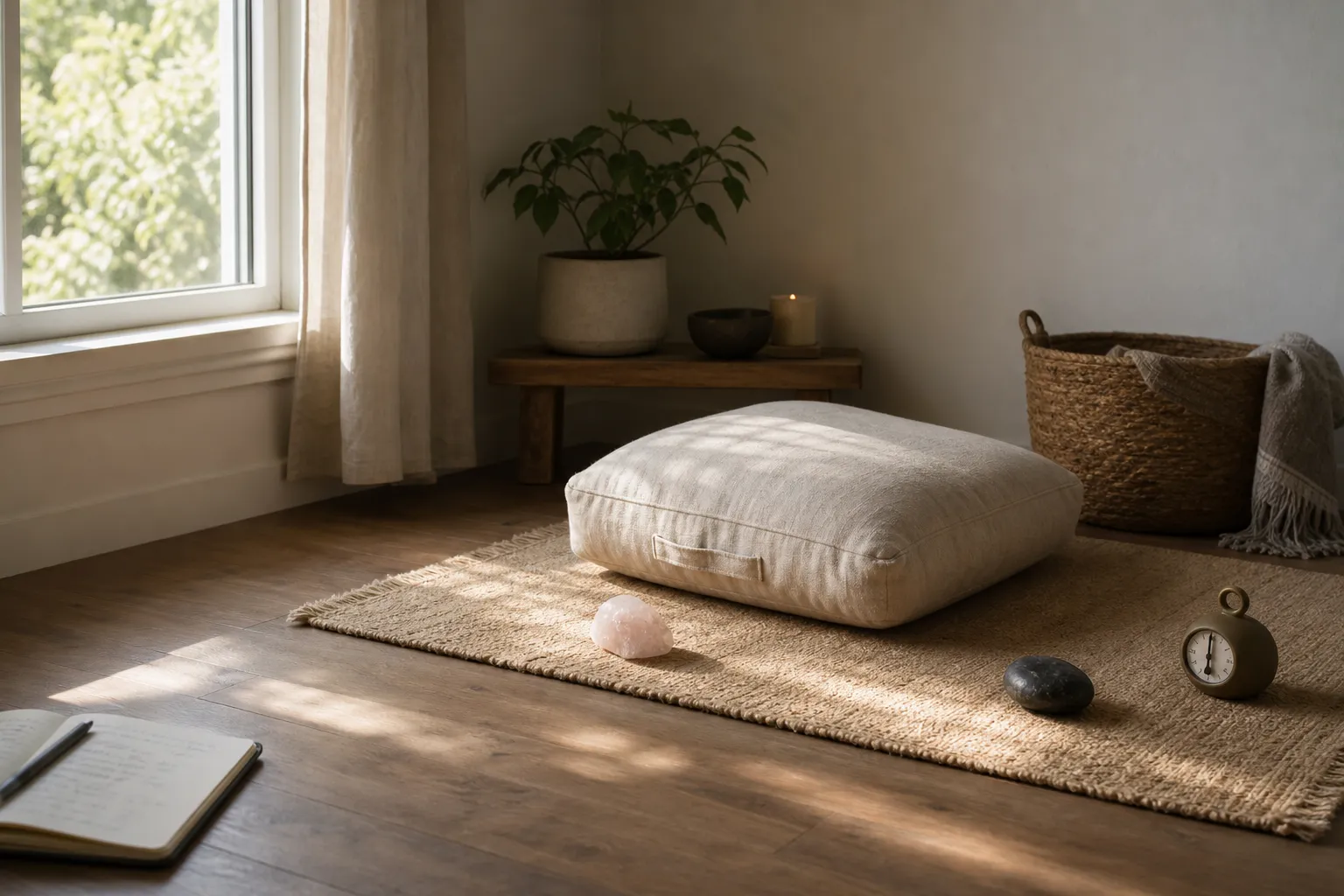
broader context
Moldavite context note
This narrower page makes more sense after the broader moldavite archive page.
A Simple Sequence for Intense Crystal Work
The most useful structure is deliberately plain. When a crystal meditation already feels strong, too many ritual pieces can make pacing harder.
Start by reducing the setup. Put away extra stones, loud inputs, and anything that turns the session into a performance. Choose one main crystal for the meditation and, if it fits your practice, one grounding object. Some readers use smoky quartz anchoring or black tourmaline grounding language here, but those terms work best as symbolic practice words rather than claims about material effects.
Then set a narrow intention. A grounded intention is not a demand for transformation. It is a container. For example: “I will sit for ten minutes and return to my breath when the session feels too strong.” That sentence defines what you are doing and what you are not doing.
A basic grounding meditation sequence
- Sit with your feet, legs, or hands supported.
- Name the session length before beginning.
- Hold or place the main crystal where it does not create strain.
- Keep an anchoring stone, cloth, pebble, ring, or ordinary object nearby.
- Pause every few minutes, before the session feels difficult to manage.
- End with a clear closing action.
- Write one or two neutral notes afterward.
That is enough for most sessions. If the practice feels too elaborate, shorten it. A grounding sequence should make the meditation easier to leave, not harder to control.
Pacing Matters More Than Intensity
A common mistake is treating intensity as proof that the meditation is working. In crystal circles, strong sensations are often described as energy movement, activation, clearing, or transformation. Those may be meaningful personal descriptions, but discomfort does not need to be treated as progress.
Grounding meditation pacing begins before the session starts. Decide the length first. For high-tension crystal meditations, five to ten minutes is often more workable than an open-ended sit. If you are new to a stone, combination, or ritual format, avoid stacking several intense elements at once.
Use meditation pauses as part of the sequence, not as a failure of focus. During a pause, soften your grip, open your eyes if needed, notice the room, and ask a plain question: “Can I continue calmly, or should I close now?” If the session feels scattered, pressured, or hard to exit, closing is the more grounded choice.
A useful rule is to change only one variable at a time. Do not extend the session, add more stones, introduce intense music, and change breathing patterns in the same sitting. Let the grounding structure stay steady while the symbolic focus changes.
Use Anchoring Stones as Cues, Not Guarantees
Anchoring stones can help some readers organize attention, but that role needs a careful frame. Black tourmaline, smoky quartz, and similar stones are often described in spiritual-wellness language as grounding or protective. In this article, those words refer to ritual meaning and reader practice, not guaranteed effects.
An anchor works best as a return point. If the main crystal represents intensity, change, or pressure, the anchor represents the decision to stay oriented. That role can be filled by smoky quartz, black tourmaline, a plain pebble, a folded cloth, the chair beneath you, or another object you use consistently.
Before and During
- Touch the anchor and name the session length.
- Return to the anchor at each planned pause.
If It Feels Too Strong
- Place the main crystal down and keep the anchor in hand.
- Touch the anchor again and state that the session is closed.
This keeps the anchor from becoming a magical emergency switch. It is part of the ritual sequence, not a promise of any result. Crystal meditation boundaries are strongest when the reader keeps judgment in their own hands.
Make the Closing Ordinary and Clear
A high-tension session should not fade out vaguely. Closing grounding steps give the meditation a firm edge, especially when the symbolic content feels charged.
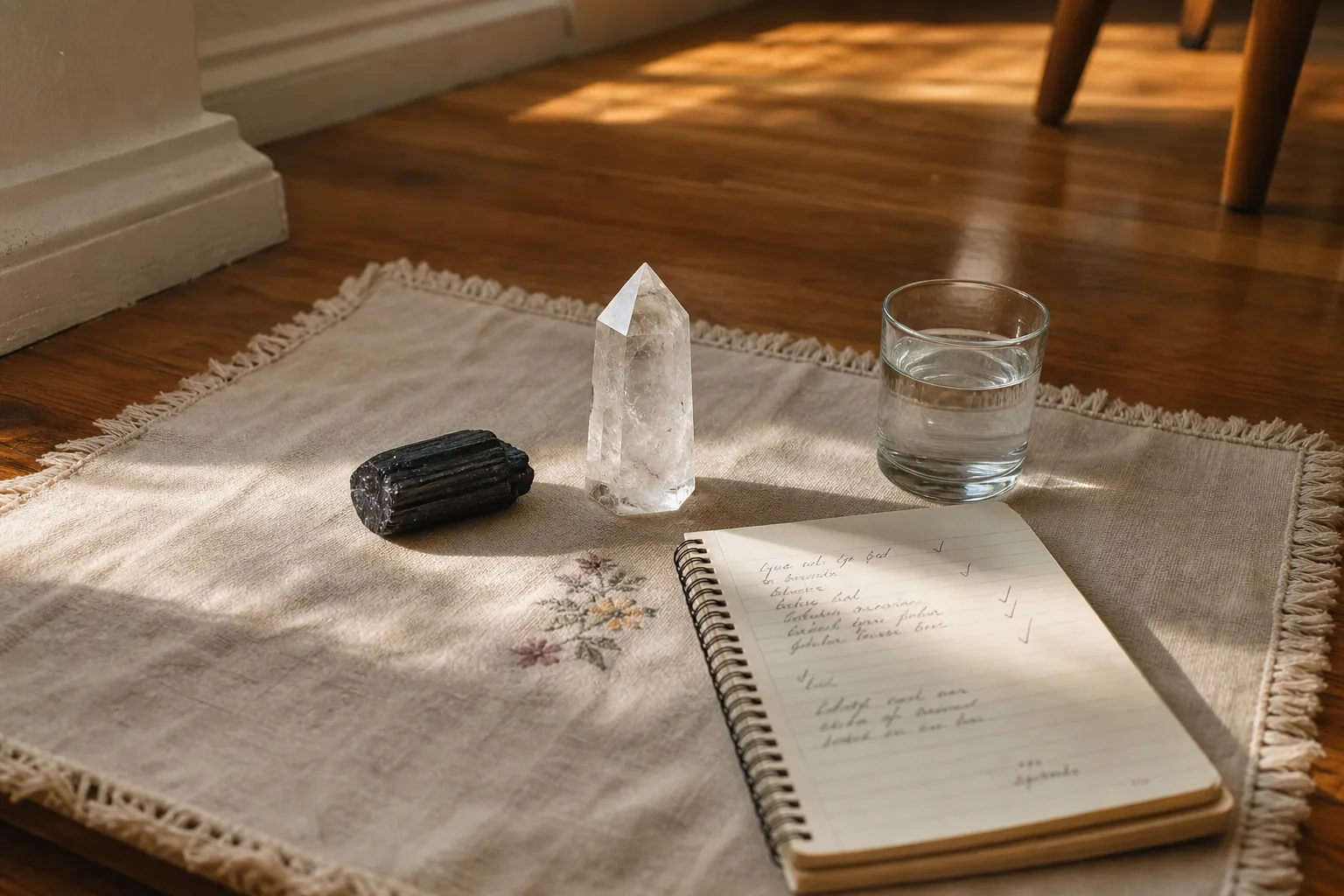
A clean close can be simple. Put the main crystal down. Place the anchoring object beside it or away from it. Open your eyes. Look at three ordinary things in the room. Move your hands, stretch your feet, drink water if you want to, and do one practical task such as folding a blanket or turning off a candle.
These actions do not need to be framed as energetic correction. They are ordinary signals that the ritual portion is over.
Afterward, make a short note. Keep it descriptive rather than interpretive. Instead of writing, “The stone forced a breakthrough,” write, “The session felt intense after six minutes, so I paused and closed.” Neutral notes help you notice patterns without turning every sensation into a conclusion.
If you return to crystal meditation later, use those notes for pacing. Did a shorter session feel easier? Did holding the stone feel stronger than placing it nearby? Did the closing feel complete, or did you feel pulled to continue? These observations do not prove a mechanism, but they can help you build a gentler sequence.
Grounding Self-Checks
Grounding self-checks protect the sequence from becoming something you push through. Keep them brief and honest.
Before the Session
- Do I have a clear end point?
- Am I using this meditation to avoid something urgent?
- Can I stop without feeling that I failed?
- Is this the right time for an intense practice?
During the Session
- Is my attention still flexible?
- Can I open my eyes and orient to the room?
- Am I able to place the crystal down?
- Is the practice becoming more pressured than useful?
After the Session
- Do I feel settled enough to return to ordinary tasks?
- Did the closing step feel complete?
- Should the next session be shorter or simpler?
- Do I need support that a ritual cannot provide?
The phrase “energy coping mechanism” is safest when it means a personal cue for slowing down and choosing a next step. It becomes risky if it replaces real-world support when someone feels unsafe, severely distressed, or unable to stop the practice. If distress is intense, persistent, safety-related, or beyond what a personal ritual can hold, end the session and seek qualified support or emergency help as appropriate.
What Should Change the Sequence
The same grounding meditation sequence does not fit every session. A few conditions should change the pacing.
Personally Strong Associations
If you are using a stone that you personally associate with strong transformation, shorten the session and simplify the setup. Do not add multiple symbolic layers just because the theme feels important.
Night Practice
If you are meditating at night, use a clearer closing routine. Put the stones away, turn on a normal light, and avoid leaving the session open-ended while trying to sleep.
New Crystal Work
If you are new to crystal work, treat the first session as orientation, not depth. The goal is to learn how you respond to the ritual format, not to create the strongest possible experience.
Emotional Overload
If you are already emotionally overloaded, choose a non-intense practice or skip the session. Crystal meditation should not be used as a substitute for appropriate care.
Repeated Difficulty Closing
If the session repeatedly feels difficult to close, reduce the intensity. Use fewer stones, shorter timing, eyes-open pauses, and more ordinary grounding objects. The ability to stop matters more than the symbolic force of the session.
Common Confusion Around Grounding and Crystal Intensity
Grounded Does Not Mean Flat
One confusion is thinking that “grounded” means emotionally flat. A grounded ritual can still feel meaningful. The difference is that it remains paced, voluntary, and closeable.
Stones Are Not Guarantees
Another confusion is treating black tourmaline grounding or smoky quartz anchoring as if the stone itself guarantees steadiness. The more careful framing is that these stones may serve as symbolic anchors for readers who already use that vocabulary.
Discomfort Is Not Required
A third confusion is assuming that discomfort should be endured because it signals progress. This sequence does not ask you to make distress into a spiritual requirement. If a session feels too forceful, the grounding choice is to pause, orient, and close.
More Tools Can Add Pressure
The final confusion is adding more tools when the sequence is not working. More crystals, longer sessions, stronger intentions, and more elaborate rituals can make the practice harder to contain. For high-tension crystal meditations, the better adjustment is usually less: fewer objects, shorter timing, clearer pauses, and a definite ending.
The Bounded Answer
Essential grounding sequences for high-tension crystal meditations are built around containment: prepare simply, set a modest intention, use one anchor, pause before intensity escalates, close with ordinary actions, and review the session without exaggerating what it proves.
Terms like smoky quartz anchoring, black tourmaline, and grounding can belong in a spiritual meditation vocabulary, but they should not be treated as verified mechanisms or safety guarantees.
The most important sign of a well-built sequence is not how powerful the session feels. It is whether you can remain oriented, choose pauses, stop when needed, and return to ordinary life without giving the ritual more authority than it can responsibly hold.