Material claim boundary
Bio-Responsive Sleep Fabrics in 2026: Passive Environmental Optimization for Lucid States
Bio-responsive sleep fabrics can be considered part of a calmer sleep setting, but in 2026 the phrase Bio-Responsive Sleep Infrastructure should be read as a cautious framing, not a settled scientific category. The supplied evidence does not support claims that bedding, sleepwear, or passive textile exposure can create lucid dreams, regulate cells, change brain function, or deliver guaranteed sleep outcomes.
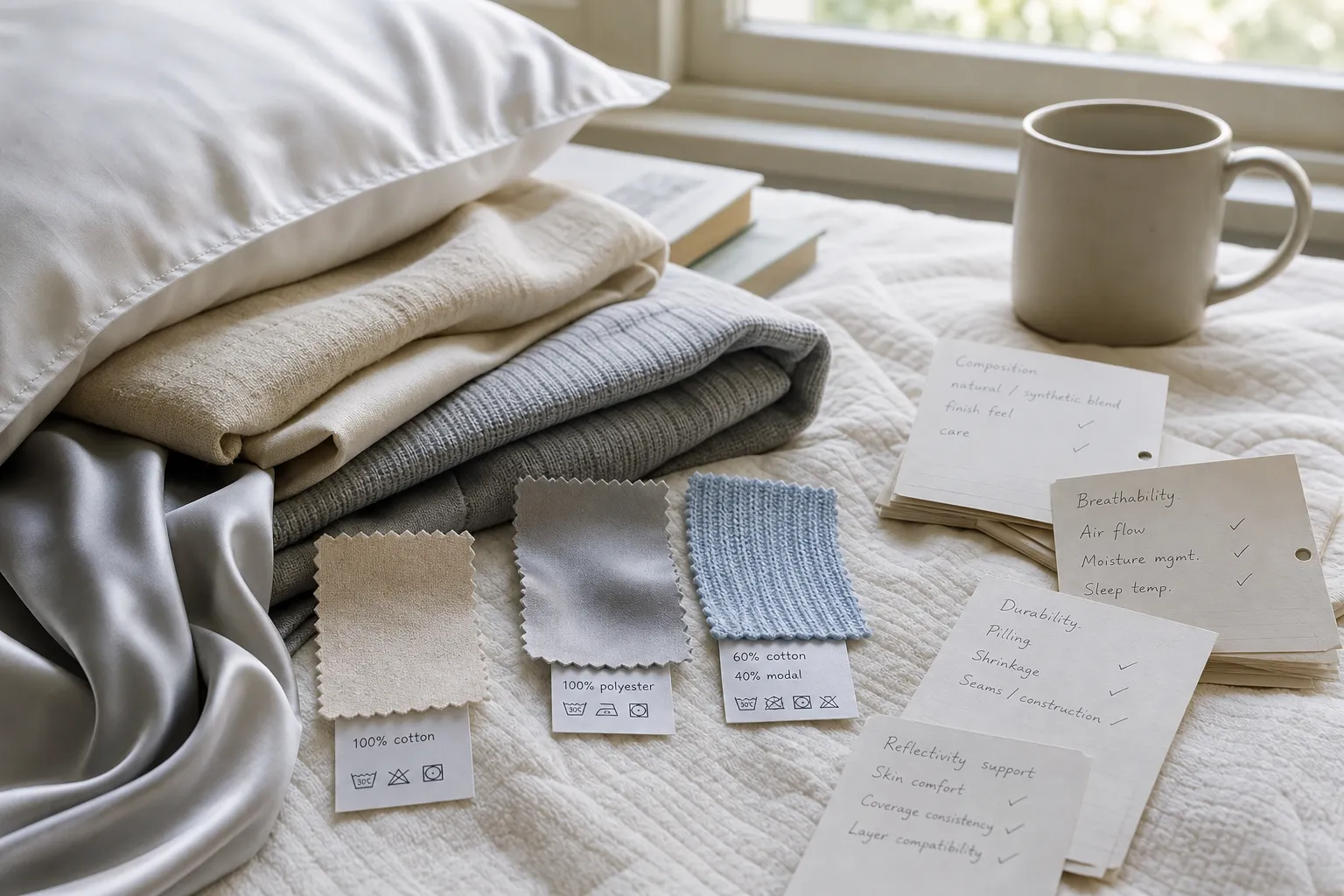
The useful answer is narrower: treat these fabrics as possible comfort materials first. Fabric composition, breathability, temperature feel, care instructions, durability, and independently supported reflectivity claims are the parts a reader can inspect. “Cellular resonance,” “passive exposure,” and lucid-state promises require stronger evidence before they should shape a serious decision.
broader context
Start with the main moldavite page
This narrower page makes more sense after the broader moldavite archive page.
What “Bio-Responsive” Can Mean Without Overclaiming
“Bio-responsive sleep fabrics” sits in a mixed zone: textile language, wellness marketing, and sleep-environment ritual. It sounds technical, but the wording alone does not show that a fabric responds to the body in a biological sense.
A careful reading treats “bio-responsive” as a claim to unpack. A fabric may be described as cooling, warming, breathable, moisture-managing, soft against the skin, or reflective of body heat. Those are material-property claims. They still need support, but they point toward features that can at least be described, compared, or tested.
Language about cellular resonance, dream activation, neurological alignment, or lucid-state enhancement moves beyond ordinary textile evaluation. The supplied materials do not establish those mechanisms. They may belong to a reader’s personal symbolism or bedtime ritual, but they should not be treated as sleep science.
The same discipline used in careful moldavite collecting applies here: specimen traits before seller language. With fabrics, that means material details before transformation language.
Passive Sleep Infrastructure Is Not a Sleep Intervention
“Passive exposure” is only useful if it stays descriptive. It means the material is part of the sleeping environment rather than something the user actively operates, ingests, tracks, or uses as a clinical tool. A sheet, blanket, pillowcase, or sleep garment can shape comfort through texture, warmth, weight, and routine. That is not the same as evidence for a specific biological result.
For lucid-state-oriented readers, the appeal is understandable. A stable sleep setting can feel like a threshold: lower light, familiar bedding, quieter cues, and a repeated bedtime rhythm may support a reflective mood. That is a subjective environment frame. It does not show that a textile causes lucid dreaming.
A grounded evaluation asks
- Is the material composition clearly stated?
- Does the fabric feel too warm, too cool, too rough, or too restrictive?
- Are care instructions realistic enough to preserve the claimed property?
- Are thermal or reflectivity claims backed by independent testing?
- Does the seller avoid medical, neurological, or guaranteed outcome language?
When the wording shifts from comfort to controlling dreams, regulating cells, or promising broad wellness effects, the evidence burden changes. Without strong visible support, those claims remain speculative.
Infrared Energy Reflection Claims Need Separate Support
“Infrared energy reflection” is one of the more technical-sounding phrases in this category. It may describe a possible material-claim category, but the supplied evidence package does not include textile documentation, independent testing, standards references, or product-specific lab reports that verify any particular fabric claim.
That means readers should not leap from “infrared-reflective” to “sleep-optimizing.” Even if a textile were shown to reflect or interact with heat in a measurable way, a separate line of evidence would be needed to connect that property to sleep quality, lucid dreaming, nervous-system effects, or biological regulation.
Better questions are modest
- What material, weave, coating, or finish is claimed to create the effect?
- Is the claim about warmth, thermal comfort, reflectivity, or biology?
- Is there independent testing, or only brand language?
- Does washing, abrasion, or long-term use affect the claimed property?
- Are the results described without health-outcome promises?
A material can be interesting without becoming sleep technology. A textile can affect comfort without establishing lucid-state effects.
Why “Cellular Resonance” Needs a Firm Boundary
“Cellular resonance” is high-caution terminology. In the supplied materials, it is not established as a mechanism for sleep fabrics. It should be read as symbolic, promotional, or speculative unless stronger evidence is provided.
That does not make a reader wrong for caring about atmosphere, body feel, or ritual. Many people approach sleep through texture, intention, and subtle environmental cues. The problem begins when contemplative language is made to sound like a measured biological effect.
A grounded statement would be: “This fabric is part of my bedtime ritual, and I feel more settled when my room and bedding are consistent.” That stays inside personal experience.
An overextended claim would say the fabric changes cellular behavior or produces lucid dreams through passive exposure. The current evidence package cannot carry that weight.
Symbolism can be meaningful without becoming proof. Comfort can matter without becoming clinical evidence. The boundary protects both sides.
What Would Make a Fabric Claim More Credible
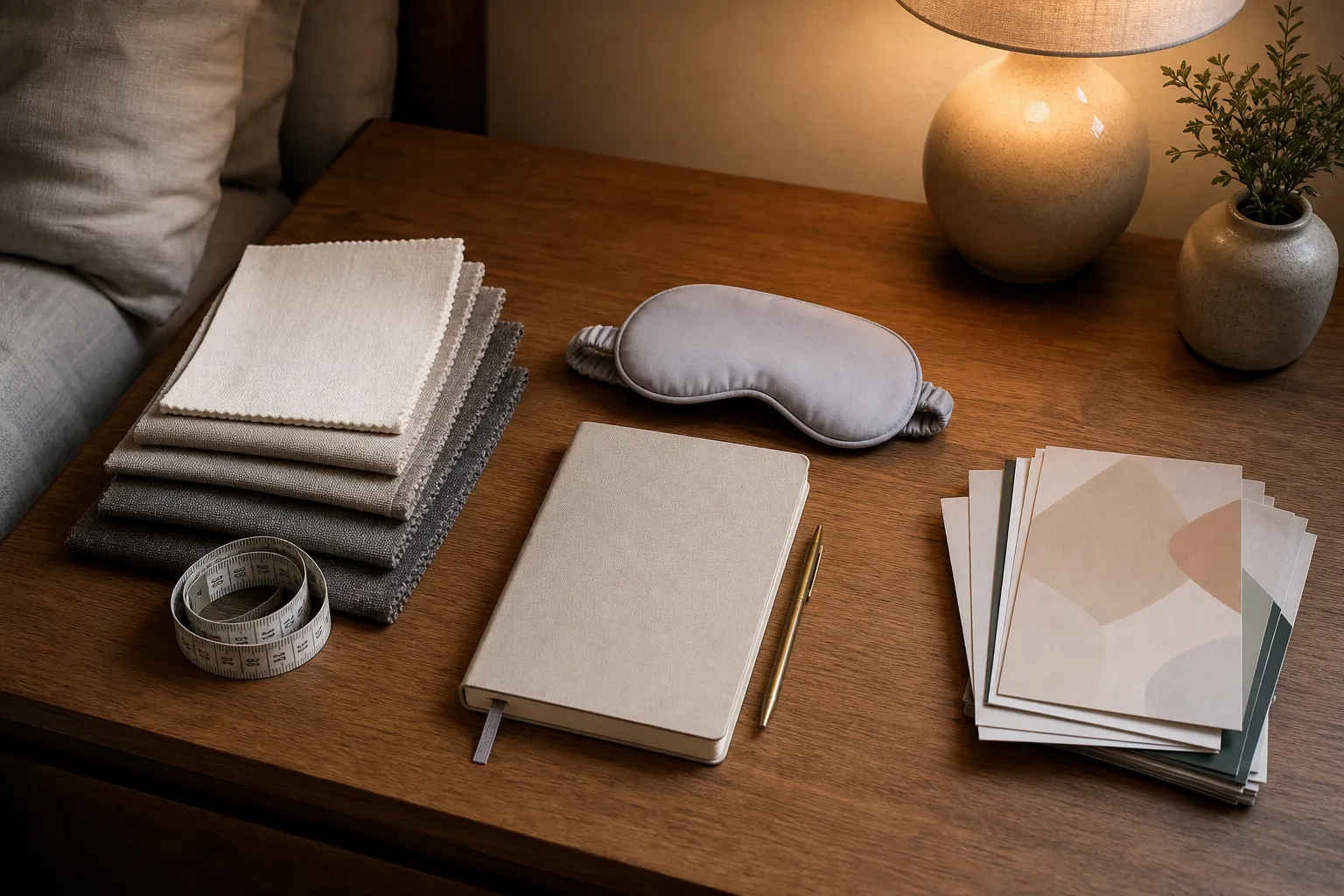
Because no citable external sources, independent tests, or curated firsthand reports were supplied for this page, the practical next step is not to rank products. It is to identify what evidence would be needed before a claim deserves more weight.
For ordinary textile claims, useful support would include clear material composition, specific performance language, care requirements, and testing that matches the claim being made. If a fabric is described as breathable, heat-managing, reflective, durable, or moisture-managing, the support should address that property directly. Vague “energy” language is not enough.
For sleep-related claims, the bar is higher. A product claim about sleep quality, lucid dreaming, neurological effects, or biological regulation would need evidence that directly addresses those outcomes. Textile reflectivity alone would not establish them. A seller’s explanation would not establish them.
For lucid-state interest, the more careful approach is to treat the fabric as one environmental variable among many: comfort, routine, room temperature, light, noise, stress, sleep schedule, dream journaling, and expectation. This article does not claim those variables produce lucid dreams. It keeps the fabric in proportion.
Inspect what can be inspected; hold interpretation lightly.
Common Confusions Around Bio-Responsive Sleep Fabrics
Label as category
“Bio-responsive” sounds established, but this page has no source showing that it is a formal scientific, regulatory, or textile-standard term. It may be a framing phrase rather than a verified class of material.
Comfort as outcome
A fabric may feel better because it is softer, cooler, warmer, smoother, heavier, lighter, or more familiar. That does not establish sleep optimization. It may only mean the material suits that person’s preferences.
Ritual as cause
A dream-oriented ritual can include a fabric without turning the fabric into the cause.
Vocabulary as evidence
Infrared, resonance, exposure, bio-field, and optimization can create a scientific atmosphere. The stronger question is simpler: what is being measured, by whom, under what conditions, and does the evidence match the promise?
A Practical Boundary for 2026 Readers
If you are considering bio-responsive sleep fabrics in 2026, the balanced position is neither automatic rejection nor belief. Treat them as possible comfort objects with unverified higher-order claims.
They may be reasonable to evaluate as bedding or sleepwear when the seller provides clear material details, ordinary care instructions, and limited claims about texture or thermal comfort. They become harder to trust when the description leans on cellular resonance language, passive exposure effects, lucid-state outcomes, or broad biological promises without independent support.
For readers with persistent sleep problems, neurological symptoms, mental-health concerns, pregnancy-related sleep concerns, medication questions, or severe ongoing sleep disruption, fabric selection should not replace qualified guidance. A textile choice is not a care plan.
The better question is not “Will this fabric make me lucid?” It is: “What part of this claim is a measurable material property, what part is personal ritual, and what part is unsupported wellness language?”
That keeps the page small enough to be useful.
FAQ
Are bio-responsive sleep fabrics shown to cause lucid dreams?
No supplied evidence supports that claim. They may be framed for lucid-state-oriented readers, but this page cannot treat any fabric as causing, improving, or controlling lucid dreams.
Is infrared energy reflection the same as sleep optimization?
No. Even if a fabric had a verified reflectivity property, that would not automatically establish sleep-quality, biological, neurological, or lucid-state effects. Each claim needs its own evidence.
Can I still use these fabrics as part of a dream ritual?
Yes, as a personal ritual or comfort choice, if the material suits you and the claims are kept in proportion. The symbolic layer should remain separate from verified textile properties.