Moldavite market evidence
The 2026 Supply Siphon: How Asian Ultra-High-Net-Worth Markets Are Draining Inventory
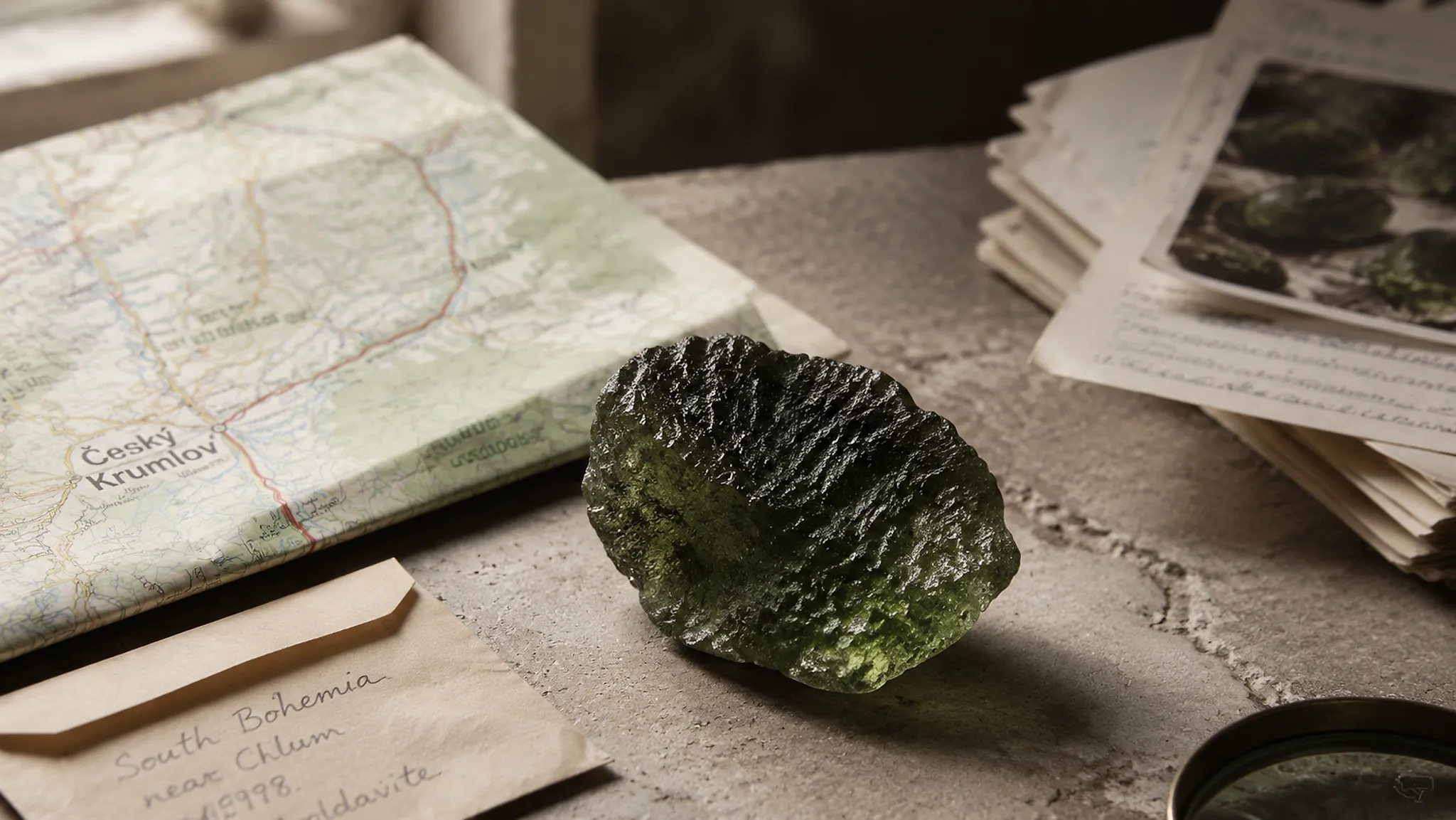
A rough green moldavite specimen can carry two stories at once: a real Czech origin story, and a market story that may be doing more work than the evidence allows. The direct answer is narrow. Public evidence does not currently show that Asian ultra-high-net-worth demand is measurably draining moldavite inventory in 2026.
The Moldavite global supply chain is constrained in a practical sense. Moldavite is tied to localized Czech deposits, especially South Bohemia and South Moravia; illegal digging and provenance risk have been reported; and public trade data is too broad to isolate this small tektite cleanly. Those facts support caution around supply. They do not prove a specific Asia-UHNW absorption volume, private-collection route, or 2026 demand surge.
broader context
Moldavite context note
This narrower page makes more sense after the broader moldavite archive page.
What the public record can support
Moldavite is not a gemstone with many active source countries. Its known Czech deposit geography matters because a narrow origin base leaves less room for easy substitution. When access, legality, land protection, or provenance becomes uncertain, the retail market can feel that pressure quickly, even when no one can measure the full flow.
The available material also supports a more grounded concern: South Bohemia has had documented illegal-mining pressure. That does not prove a global shortage, but it does show why provenance belongs in the conversation. A specimen’s route from field to dealer is part of its collector value, not just a paperwork detail.
This is where the stronger market claim begins to outrun the evidence. A localized, provenance-sensitive material can plausibly attract private buyers, luxury resellers, and collectors who prefer scarce natural objects. But plausible is not the same as measured. The sources support constrained origin and messy extraction conditions; they do not identify who is absorbing inventory at scale.
Why the Asia-UHNW claim is difficult to verify
“Moldavite market absorption” sounds like something that should be visible in data. In practice, the public record is too coarse. Broad Czech export statistics can show national merchandise movement, but they do not separate raw moldavite from other collectors’ pieces, jewelry, glass, or mixed commercial categories. They also do not identify buyer wealth level, final destination, private-client routing, or resale chains.
A trade category connected to Singapore or another Asian hub may be useful as a boundary example. It can show how niche collectible goods disappear inside wider reporting buckets. It cannot confirm that moldavite itself is being routed into Asian ultra-high-net-worth collections.
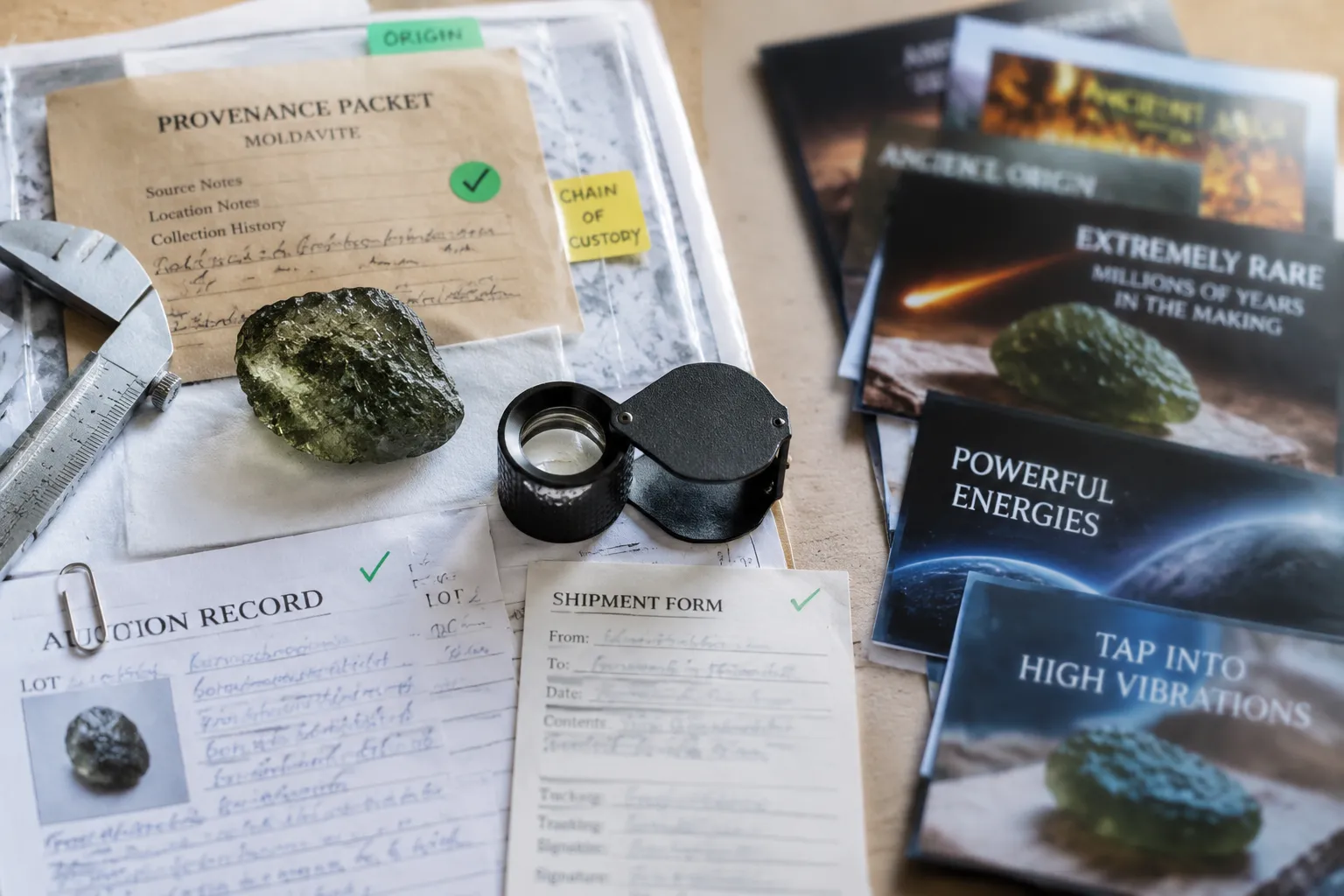
Commercial scarcity language adds noise. Seller pages often speak in the language of disappearing stock, private collections, heirloom assets, and rising prices. That language may reflect buyer anxiety or retail positioning. It is not, by itself, evidence of market absorption volume. Without shipment-level records, dealer reporting, auction data, or credible collector-market coverage, the 2026 Asia-UHNW drain remains an unverified market narrative.
What would count as stronger evidence
If Asian ultra-high-net-worth demand were materially pulling moldavite out of the visible market, the better evidence would be specific and traceable.
Useful evidence would include
- Dealer or wholesaler reporting that shows repeated bulk routing into Asian private-client channels
- Auction records where moldavite appears as a recurring collected category, not just occasional lots
- Shipment-level data that separates moldavite from broader gemstone, glass, or collectible categories
- Credible luxury-market reporting tied to named buying patterns and time periods
- Price analysis with matched specimen type, quality, size, date, and source method
What would not be enough
Seller claims that inventory is being drained, social posts about scarcity, general commentary on Asian logistics, or broad “China Plus One” supply-chain discussions. Those may explain the mood around luxury goods or trade routes. They are not moldavite evidence.
Where buyers get misled
The common mistake is mixing demand language with specimen reality. A restock banner is not proof of worldwide depletion. A private-collection rumor is not a market data point. A vivid green stone is not automatically authentic moldavite.
Authenticity anxiety makes the market easier to hype. Buyers do encounter colored glass fakes, imitation beads, faceted substitutes, and raw-looking pieces sold with confident stories. That does not establish Asian demand; it shows that scarcity language and imitation risk often travel together. The more dramatic the supply story, the more important provenance becomes.
A careful buyer should read foreign-UHNW absorption claims as hypotheses unless they are tied to observable records. Otherwise, the premium may be attached to the story rather than the specimen.
The defensible conclusion
The supported conclusion is smaller than the title’s strongest wording. Moldavite supply is geographically constrained, with South Bohemia and South Moravia central to the Czech source story. Illegal digging and provenance risk are real concerns. Public trade data is too broad for confident moldavite export-flow analysis. Commercial scarcity language cannot prove who is buying the inventory.
So yes, the Moldavite global supply chain is constrained. No, the current public evidence does not confirm that Asian ultra-high-net-worth markets are measurably draining moldavite inventory in 2026. The claim may be directionally true in private channels the public cannot see, but visible sources stop short of confirmation.
For collectors, that is the useful boundary: inspect the specimen, ask for provenance, treat scarcity claims as market language until records support them, and keep the real supply constraints separate from the louder story about who is supposedly buying it all.