Moldavite Zen
home / moldavite metaphysical meaning / The 2-Hour Rule: A Safe Titration Protocol for First-Time Users

First-use protocol

The 2-Hour Rule: A Safe Titration Protocol for First-Time Users

Moldavite Titration is best understood as a comfort-based first-use routine: wear or carry one piece of moldavite for up to two hours during an ordinary daytime period, then remove it and notice how the session felt. The “2-hour rule” is not a clinical protocol, not proof of energetic effects, and not an authenticity test. It is simply a low-pressure way to begin if you are curious about moldavite but unsure how you will respond to the intense language often attached to it.

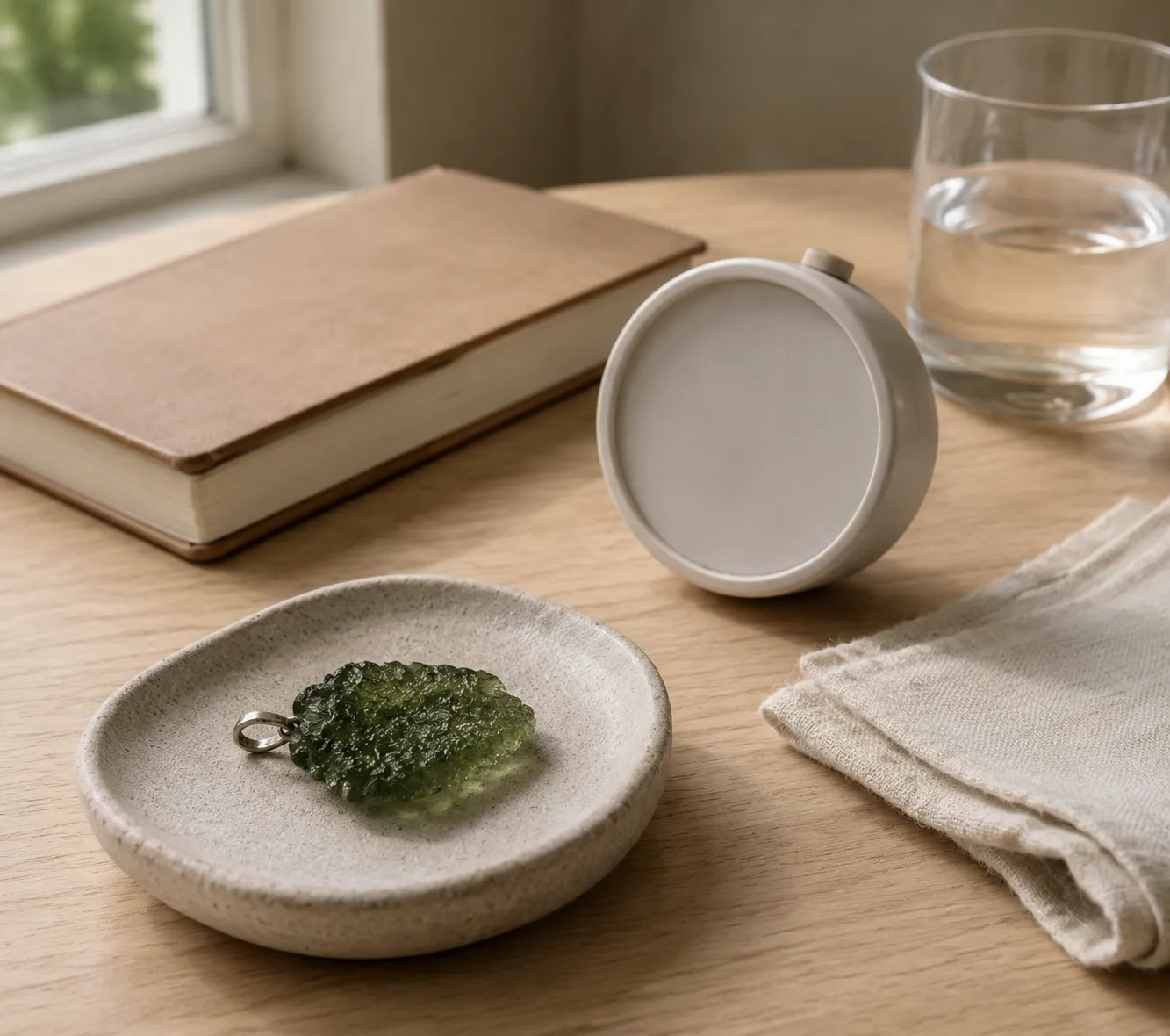
A single piece of moldavite beside a simple two-hour daytime use setup
A first session works best when the setting is ordinary, the object is singular, and the stop point is clear.

What the 2-Hour Rule Means

The 2-hour rule is a gradual exposure approach for a first-time moldavite user. Instead of wearing moldavite jewelry all day, sleeping with it, combining it with several practices, or treating the first session as a major spiritual event, the routine keeps the encounter simple:

  • Choose one moldavite item: a pendant, ring, bracelet, or small pocket stone.
  • Use it during a normal daytime activity.
  • Keep the first session to two hours or less.
  • Remove it afterward.
  • Notice comfort, distraction, expectation, mood, and any unusual subjective response.
  • Repeat later only if you want to.

This is not “titration” in a clinical sense. In this context, Moldavite Titration means pacing contact so the experience stays observable and easy to stop. The word is useful because it describes a gradual approach, but it should not be mistaken for a scientific measurement of moldavite’s effects.

Moldavite itself is a natural green tektite, an impact-related glass associated with the Central European Ries impact event. Its geological story is real and material: formation, chemistry, texture, and distribution can be discussed through geology and gemology. That evidence lane is separate from spiritual language often used around moldavite, such as “high vibration,” “transformation,” or “energy acclimatization.”

The 2-hour rule sits in the practical middle. It does not dismiss the fact that some wearers report strong subjective experiences. It also does not turn those reports into universal facts.

A useful first session can be very plain: wearing a pendant while reading, working at a desk, walking, or doing household tasks. The ordinary setting matters. If your first use happens during a highly emotional ritual, an intense meditation session, or a major life event, it becomes harder to tell whether your reaction is related to the stone, the setting, your expectations, or unrelated stress.

The point is not to “activate” moldavite faster. It is to give yourself a clear start and stop point.

When a 2-Hour Moldavite Routine Makes Sense

The 2-hour rule is most useful for people who arrive with uncertainty. That includes first-time moldavite jewelry wearers, people who have heard dramatic stories online, and collectors who are spiritually curious but do not want to overread every sensation.

In crystal communities, moldavite is often described as unusually intense compared with more familiar stones. Some people say they notice heat, tingling, emotional movement, alertness, unease, or pressure when they first handle it. Others feel nothing notable at all. Reliable geology sources do not establish those subjective effects as measurable or predictable. Still, because the stories shape expectations, a gradual routine can help keep the first use calm.

This routine may fit if:

  • You are trying moldavite for the first time and feel nervous.
  • You bought moldavite jewelry but are unsure whether to wear it all day.
  • You are sensitive to expectation, symbolism, or emotionally charged objects.
  • You have seen dramatic “moldavite changed my life” stories and want a more grounded entry point.
  • You want to separate ordinary comfort from spiritual interpretation.
  • You are unsure whether to carry a pocket stone, wear a pendant, or use moldavite during meditation.

For a first trial, wearing or carrying moldavite while awake is usually easier to observe than sleeping with it or placing it near the bed. Daytime use gives you the option to remove the piece immediately. It also lets you notice context: caffeine, fatigue, work stress, social tension, excitement about a new purchase, or concern about fakes can all color the experience.

A 2-hour window is not a magical threshold. It is a practical boundary. One person may prefer 20 minutes. Another may feel comfortable for a full afternoon after several uneventful sessions. The rule works because it gives beginners permission not to force constant contact.

A simple first-use sequence

For a clean first test, keep the session modest:

  1. Start on a normal day, not during a crisis, ceremony, or major decision.
  2. Use one piece only.
  3. Wear it or keep it in a pocket for up to two hours.
  4. Avoid adding new rituals, new crystals, or intense practices during the same window.
  5. Remove it at the planned time, even if nothing dramatic happens.
  6. Decide later whether to repeat, shorten, or extend.

This kind of routine is useful precisely because it is uneventful. It lowers the pressure to experience something.

What to Avoid During the First Moldavite Session

The most common beginner problem is not the stone itself. It is stacking too many expectations on one object. A new piece of jewelry becomes a test of authenticity, sensitivity, spiritual readiness, cosmic timing, and personal transformation all at once. That is too much weight for a first session.

A simpler rule is better: one item, one daytime window, one clear stop point.

Avoid overnight wear at the beginning

Sleeping with moldavite is a common topic in crystal-community content, especially around vivid dreams or spiritual acceleration. For anxious first-time users, it is not the clearest starting point. Sleep is harder to monitor and harder to interrupt. If you wake up restless or unsettled, there may be many ordinary explanations.

This does not mean no one should ever keep moldavite near a bed. It means overnight use is not the best first test if your goal is gradual moldavite exposure. Start while awake. If you later choose to experiment with sleep placement, treat it as a separate choice rather than part of the initial 2-hour routine.

Avoid treating discomfort as proof

Some readers worry that if they feel dizzy, agitated, emotional, or overwhelmed, it means moldavite is “working.” That interpretation can encourage people to push through discomfort. A more careful approach is to remove the stone and take a break.

Discomfort does not prove authenticity. It does not prove transformation. It does not prove that you are energetically sensitive. It is simply a reason to pause.

If a reaction feels severe, persistent, frightening, or health-related, seek appropriate health or mental-health support rather than trying to decode the experience through moldavite symbolism. The stone should not be used as a framework for explaining distress.

Avoid using sensation as an authenticity test

A real piece of moldavite does not have to produce a dramatic sensation. A fake piece of glass could still trigger a reaction through expectation, anxiety, excitement, or suggestion. For that reason, “I felt something” and “I felt nothing” are both weak authenticity tests.

Authenticity belongs in a different evidence lane. Natural moldavite can show geological and gemological indicators such as characteristic surface sculpting, internal features, chemistry, and provenance. Some gemological discussions also note that imitations may differ in surface character, inclusions, luster, or other observable traits. Those are material questions, not emotional ones.

For the 2-hour rule, the goal is comfort and observation. For authenticity, look at provenance, physical features, seller documentation, and, when needed, qualified testing.

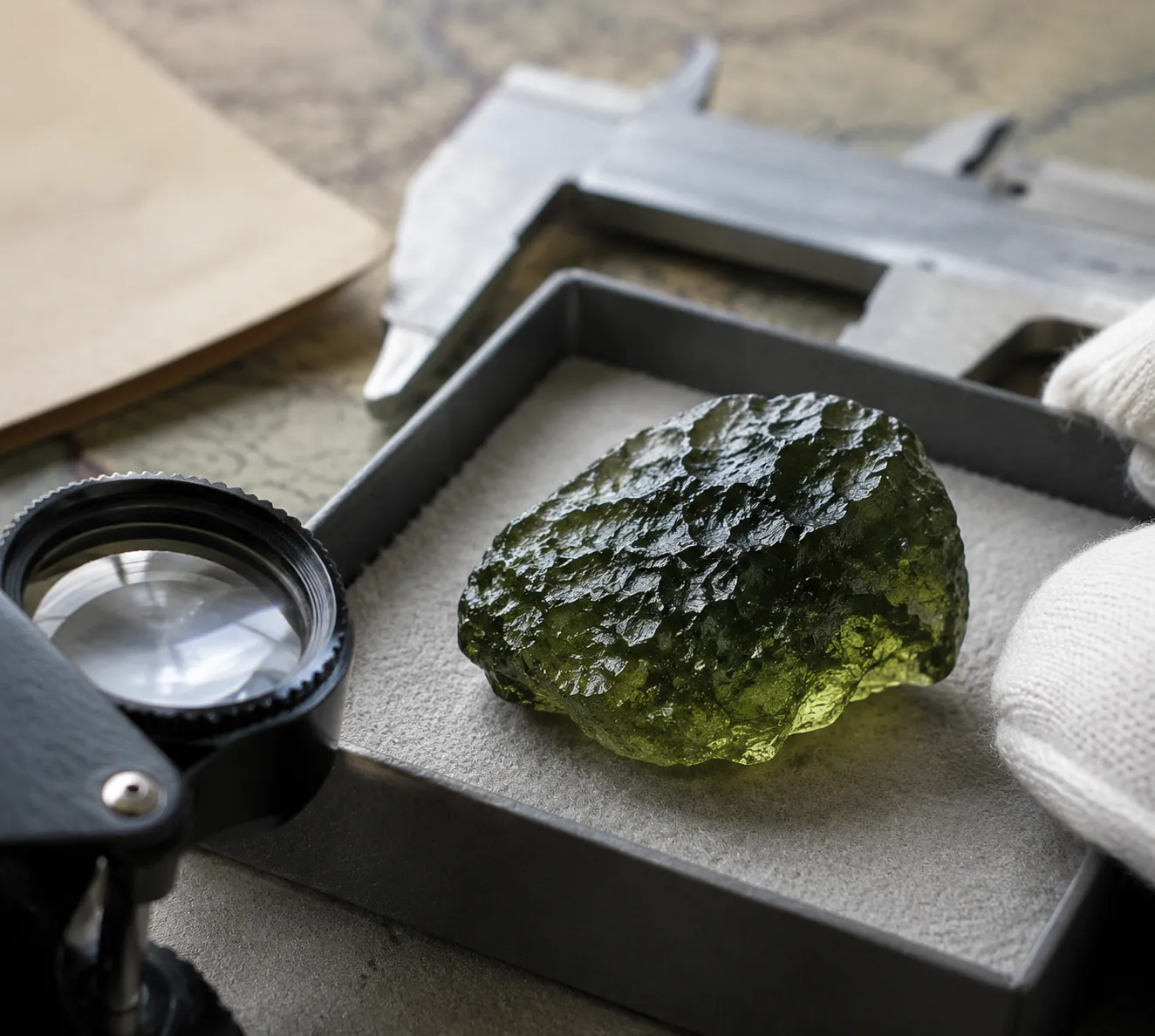
Moldavite examined as a material object rather than judged by personal sensation
Comfort notes belong to the first-use routine; authenticity questions belong to observable material and provenance evidence.

How to Adjust After the First Two Hours

After the first session, do not rush to interpret the result. The useful question is not “Did moldavite change me?” but “Was this comfortable enough to repeat?”

If the first session felt neutral, you can repeat the same window another day or extend slightly if you prefer. Feeling nothing is not failure. Many people have no noticeable reaction to moldavite, and that does not make the piece less real or the user less receptive.

If the session felt pleasant or meaningful, keep the same restraint for another round before expanding. Beginners often want to move immediately from a calm first experience into all-day wear, sleep use, meditation, or ritual work. A slower pace makes it easier to notice whether the experience remains steady.

If the session felt uncomfortable, shorten the next attempt or stop using the piece for a while. You do not need to “build tolerance.” You do not need to prove you can handle it. The point of a comfort-based routine is that stopping is always allowed.

A practical adjustment pattern might look like this:

  • If two hours feels too long, try 15–30 minutes.
  • If two hours feels fine, repeat the same window before extending.
  • If you feel distracted, remove it during work, driving, or important tasks.
  • If stories about moldavite make you anxious, take a break from that content before trying again.
  • If your main concern is authenticity, pause the wearing experiment and examine the material question separately.

This is where the phrase “energy acclimatization” needs careful handling. In spiritual circles, some people use it to mean slowly getting used to moldavite’s perceived intensity. In this routine, it is better understood as expectation management and comfort pacing. The routine does not prove that a measurable energy field is changing. It simply gives the wearer a calmer way to engage with a symbolically charged object.

The Limits of the 2-Hour Rule

The 2-hour rule can make a first encounter feel less pressured, but it has clear limits.

It cannot verify that moldavite causes transformation. It cannot show whether a sensation came from the stone, expectation, mood, environment, or another factor. It cannot establish that moldavite affects health, sleep, fertility, emotions, focus, or life events. Claims in those areas should not guide health decisions.

The routine also does not replace authenticity work. Moldavite is a real geological material, and imitation glass exists in the market. But an authenticity check depends on physical and provenance evidence, not the strength of a wearer’s response. A calm reaction does not make a piece fake. A dramatic reaction does not make it genuine.

The safest meaning of “safe” in this page title is modest and easy to stop. It means the routine avoids high-pressure practices for the first trial. It does not mean moldavite has been tested as suitable for every person or every circumstance.

A first-time moldavite user can reasonably begin with two hours, during the day, with one piece, in an ordinary setting. That is enough. If the experience feels comfortable, continue gradually. If it does not, remove the piece and step away from the experiment. Moldavite can carry a powerful cultural and symbolic reputation, but the first encounter does not need to become a test, a performance, or a crisis.
FAQ

Can I wear moldavite longer than two hours?

Yes, if it feels comfortable and you want to. The 2-hour rule is a starting boundary, not a permanent limit. Extend gradually rather than jumping straight into constant wear.

What if I feel nothing from moldavite?

Nothing may happen, and that is normal. A lack of sensation does not mean you used it incorrectly, and it does not determine whether the piece is authentic.

Should I sleep with moldavite as a beginner?

For a first trial, daytime use is clearer. Sleep use is harder to monitor and easier to overinterpret, so it is better treated as a later, separate choice rather than part of the beginner routine.

Sources

Sources and further reading

Reference links are limited to sources considered suitable for public citation in this page.

Moldavite - A green gem material formed by an asteroid impactAccessible geology/gem reference for explaining moldavite as a natural green tektite/impact glass and for keeping factual material claims separate from subjective energetic interpretations.educational geology referenceMoldavite – the Mysterious Tektite Origin, Properties and OccurenceNon-retail mineralogical overview useful for origin, occurrence, and physical/material context of moldavite.mineralogy/geology educational articleMoldavite: Properties, How to Spot Fake Moldavite – Geology InSemi-authoritative geology explainer that includes basic properties and fake-marker context in a non-retail format.geology educational explainerAn improved theory of moldavite formation | Institute of Geology of the Czech Academy of SciencesInstitutional geology source from the Czech Academy of Sciences, useful for higher-confidence background on moldavite formation theories.institutional geology research summaryMoldavites: a review — Bulletin of GeosciencesScholarly review source focused on moldavites, useful for consolidating origin, distribution, and scientific material context.Peer-reviewed studyShape analysis of moldavites and their impact originAcademic article in Mineralogical Magazine relevant to moldavite morphology and impact-origin discussion.Peer-reviewed studyA scheme for moldavite fluvial abrasion based on observations from a natural river streamPeer-reviewed meteoritics/planetary science article that can support the idea that moldavite surfaces and shapes are studied as natural geological materials.Peer-reviewed studyDistinguishing "Synthetic" and Natural MoldaviteRelevant gemological/authenticity-focused paper candidate for understanding differences between natural moldavite and imitations, though ResearchGate is a repository rather than the publisher.gemological/authenticity literature candidate