Nervous-system boundary note
The “Moldavite Flush” Explained: How to Regulate Your Nervous System
The Moldavite flush is crystal-community language for a sudden wave of heat, redness, tingling, shakiness, dizziness, emotional intensity, or “activation” that some people connect with holding or wearing moldavite. It is not a medical term, and available sources do not show that moldavite creates a distinct body reaction.
The most grounded answer is: take the sensation seriously, but do not assume the stone is the cause. Put the moldavite down, reduce stimulation, orient to the room, and give your body a chance to settle before interpreting what happened.

broader context
Moldavite context note
This narrower page makes more sense after the broader moldavite archive page.
What People Mean by the “Moldavite Flush”
In crystal circles, the Moldavite flush usually means a felt event, not a formal condition. People may describe a warm face or chest, a buzzing feeling, a racing heart, lightheadedness, trembling, or the sense that the body has been “switched on” too quickly.
That language can be meaningful in a spiritual or symbolic setting. Moldavite already carries a strong reputation, so words like high-frequency energy, body activation, and emotional surge often give people a way to describe intensity or surprise.
The useful distinction
- Moldavite as a material object: a natural glass tektite.
- Moldavite flush as community language: sensations people associate with the stone.
- Moldavite physical symptoms as body signals: experiences that may have many possible causes.
- Moldavite high-frequency energy as belief language: a spiritual interpretation, not a geological or medical fact.
This matters because the feeling can be real even when the cause is uncertain. Heat, shakiness, pressure, or fear should not be dismissed, but they also should not be forced into a single crystal explanation.
Why the Body May Feel Activated
If you hold moldavite and suddenly feel flushed or unsettled, several things may be influencing the moment. The stone may feel emotionally charged to you. You may have read intense stories about it. You may be concentrating closely on body sensations, expecting something to happen, or sitting in a meditation state where ordinary signals feel louder.
The setting also matters. Caffeine, poor sleep, dehydration, stress, heat, a crowded shop, standing too long, or getting up quickly can all shape how the body feels.
A better question than “Did moldavite cause this?” is: “Is my body feeling more steady or less steady right now?”
If it feels manageable
If the experience feels mild, spacious, and manageable, you may choose to slow down and observe.
If it feels escalating
If it feels sharp, escalating, frightening, or disorienting, the priority is regulation, not interpretation.
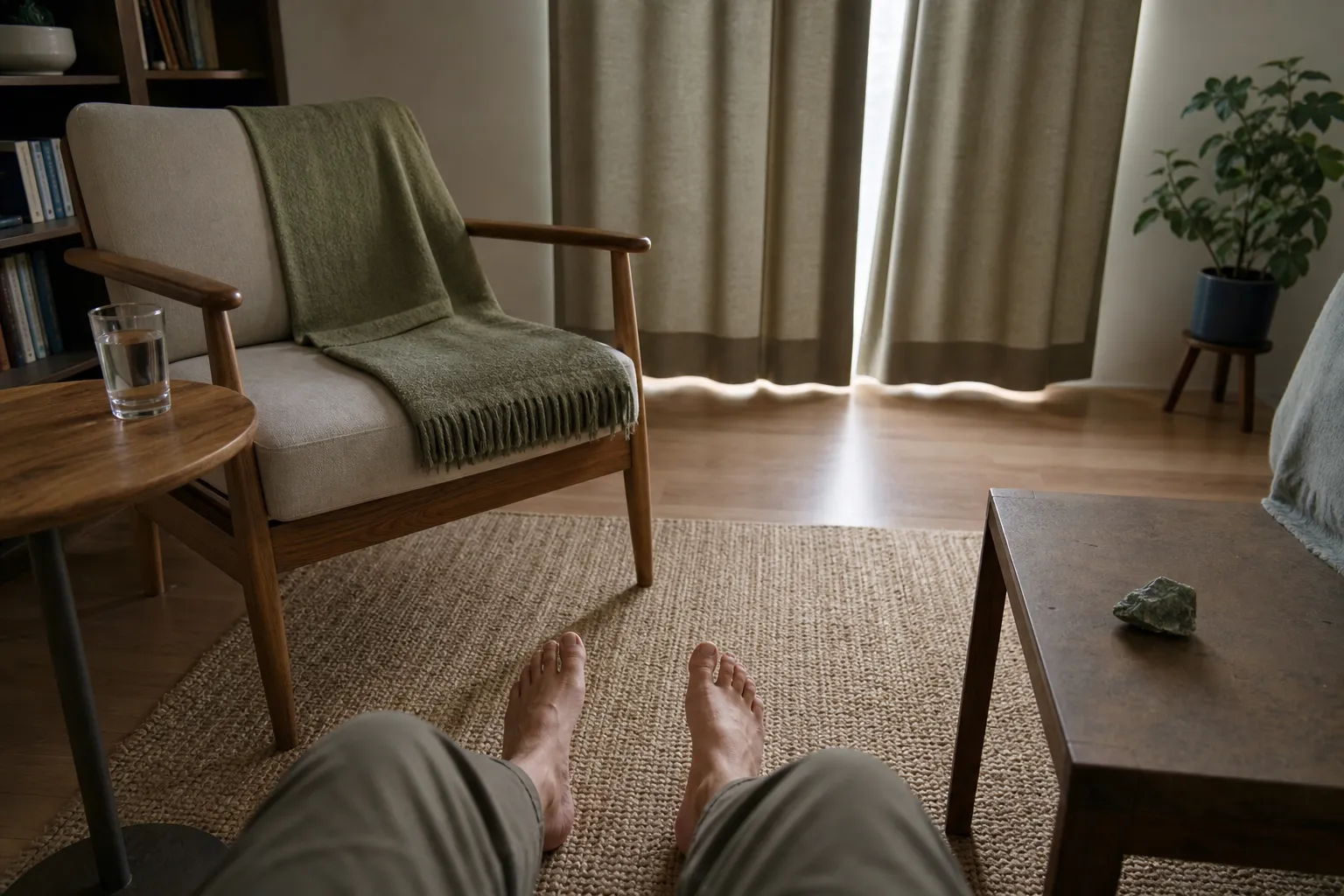
Used carefully, somatic processing simply means noticing body signals without pushing for a dramatic breakthrough. You might orient to the room, feel the chair under you, notice your feet, and let the intensity come down in small steps. That does not mean moldavite is doing nervous-system work for you. It means you are meeting a strong sensation in a steadier way.
What Not to Assume About Moldavite Physical Symptoms
The common mistake is treating every intense sensation as confirmation that the stone is “working.” A hot face, trembling hands, chest tightness, nausea, dizziness, or a racing heart can overlap with stress, panic-like episodes, medication effects, dehydration, blood sugar shifts, illness, or another health factor.
The opposite mistake is dismissing the experience entirely because the evidence is limited. A reader may be feeling something very uncomfortable. The responsible boundary is not “nothing happened.” It is: “Something may be happening in your body, but moldavite is not the only possible explanation.”
Be careful with claims that frame the flush as required purification, spiritual advancement, kundalini movement, or a sign that a stone is genuine. A strong reaction does not verify authenticity. Authenticity belongs to material examination, provenance, and gemological knowledge, not to whether someone feels overwhelmed.
A practical rule: if the body signal would concern you in any other setting, it should still concern you while holding a crystal. Moldavite does not make severe or unusual symptoms automatically safe, symbolic, or necessary.
A Gentle Regulation Sequence for an Intense Moldavite Flush
If the Moldavite flushing sensation feels too strong, begin by lowering intensity.
- 1. Set the stone down. Put it on a table, in a pouch, or across the room. You do not need to keep holding it to “finish” the experience.
- 2. Change posture slowly. Sit down if you are standing. Let your feet meet the floor or your back touch the chair. Move carefully if you feel lightheaded.
- 3. Orient to the room. Look around and name a few neutral details: a wall color, a window, a lamp, the edge of a table. This helps attention return to the present environment.
- 4. Find contact points. Notice the soles of your feet, the weight of your hands, or the support under your body. Keep it simple and physical.
- 5. Reduce stimulation. Lower loud sound, step away from intense conversation, loosen tight clothing if appropriate, and give yourself a few quiet minutes.
- 6. Check basic needs. Consider water, food, rest, temperature, caffeine, and other stimulants. Do not make the whole moment about the crystal.
- 7. Let the experience get smaller. Instead of scanning every sensation, widen your attention. Notice the room, one steady object nearby, and your breath as it naturally is.
This sequence is not a guaranteed fix. It is a low-risk way to help the body move from intensity toward steadiness.
When to Pause the Practice or Get Support
It is reasonable to pause moldavite use if the experience feels too strong, repeats often, or makes you anxious about wearing or touching the stone. You might put the piece away for a while, shorten future contact, avoid using it during meditation, or pair any future practice with ordinary grounding such as sitting, eating, walking, or being in a calm place.
Seek appropriate professional support if symptoms are new, severe, persistent, frightening, medically unusual, or hard to separate from a health concern. Chest pain, fainting, severe shortness of breath, confusion, ongoing dizziness, or intense fear that feels unmanageable should not be handled as a crystal interpretation first.
This boundary does not reject spiritual meaning. You can still reflect later on why moldavite felt charged, what it represents to you, or whether the timing touched something emotional. In the intense moment, though, your body needs steadiness more than a theory.
The Most Balanced Meaning of the Moldavite Flush
The most careful meaning is this: the Moldavite flush is a community term for heat, flushing, body activation, or emotional intensity that some people associate with moldavite, while the cause remains uncertain. It belongs to experience language and interpretation, not to established medical terminology or material science.
If the sensation is mild, slow down and decide whether the practice still feels useful. If it is intense, stop engaging the stone and regulate first. If it is severe, persistent, or alarming, widen the frame beyond moldavite and get suitable support.
Moldavite does not need exaggerated claims to be interesting. Its geological identity, collector appeal, and symbolic force are already enough. Let the stone remain a stone, let the experience be taken seriously, and let your nervous system set the pace.
FAQ
Is the Moldavite flush a real thing?
It is real as a phrase people use in crystal communities. It is not an established medical category, and available evidence does not show that moldavite creates one specific body reaction.
Does a strong reaction mean my moldavite is authentic?
No. Feeling flushed, shaky, emotional, or overwhelmed is not a reliable authenticity test. Moldavite identification depends on material features, provenance, and expert evaluation.
Should I keep holding moldavite if the sensation feels intense?
No. If the experience feels too strong, set the stone down and regulate first. You can interpret the meaning later, once your body feels steadier.
Can grounding practices help?
They may help some people feel more oriented. Simple steps like sitting down, noticing the room, feeling your feet, reducing stimulation, and checking basic needs are usually a better first response than trying to intensify the experience.