Grounding and pacing
How to Manage the Moldavite Flush: Grounding Practices for High-Frequency Energy
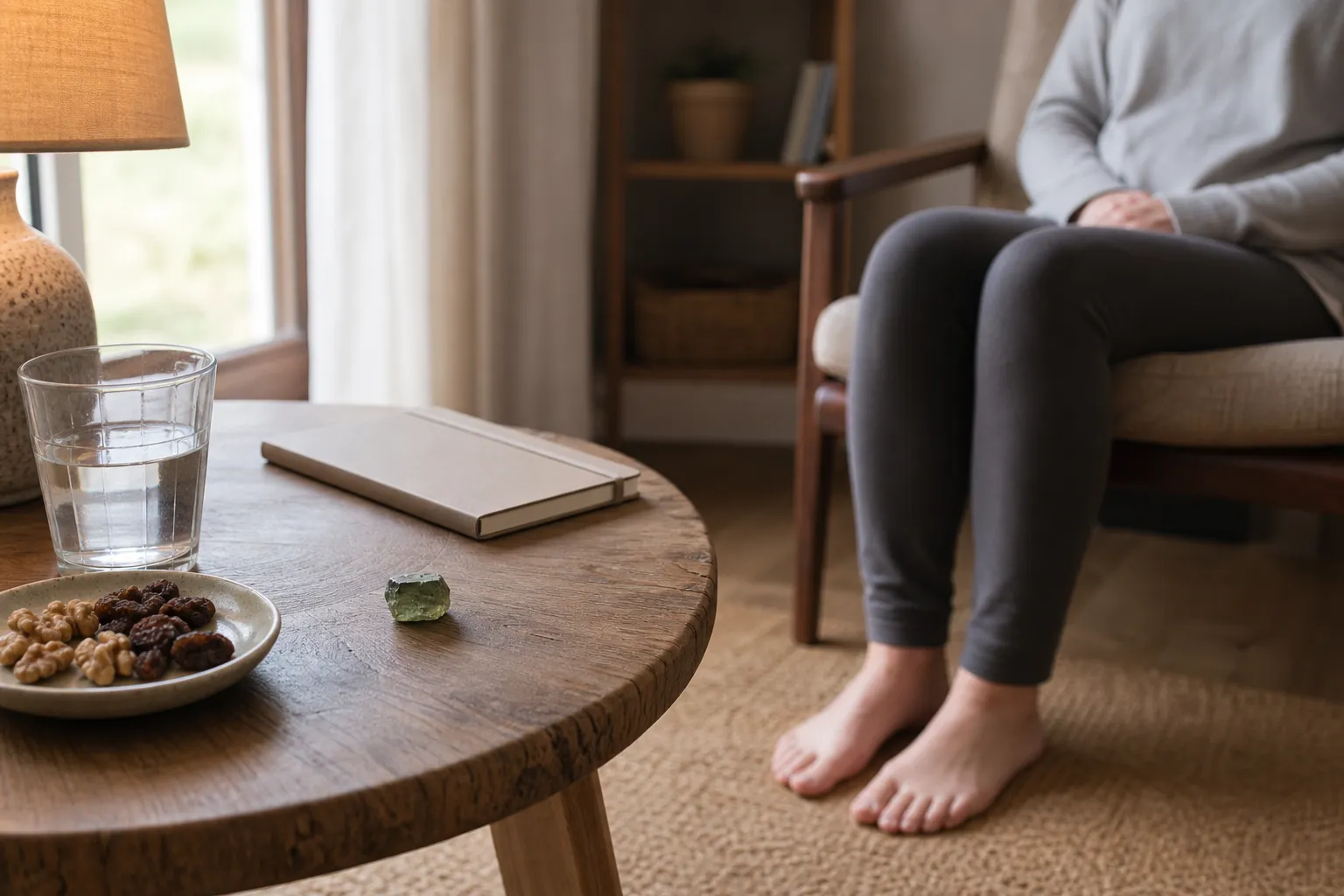
If you believe you are experiencing a Moldavite Flush, start by making the moment smaller: put the Moldavite down, reduce noise and screen input, sit or stand somewhere stable, breathe slowly, and take care of basic body needs before deciding what the experience means.
In Moldavite circles, “flush” is often used for a subjective wave of warmth, spaciness, emotional intensity, restlessness, or overstimulation around the stone. Those sensations can feel real without proving a medical cause, an energetic mechanism, detoxification, or a supernatural event.
The practical answer is pacing. Stop contact for now. Drink water if that fits the moment. Eat something simple if you have not eaten. Touch the floor, a table, a wall, or another steady surface. Step away from intense conversation, dramatic stories, or group pressure. If the sensations are severe, sudden, persistent, frightening, or involve faintness, chest pain, panic, detachment, or feeling unsafe, treat that as a support signal and seek appropriate medical or mental health help.
broader context
Start with the main moldavite page
This narrower page makes more sense after the broader moldavite archive page.
Start by Interrupting the Intensity
The first move is not interpretation. It is interruption.
Take the stone off your body, close the box, move it across the room, or set it down somewhere neutral. You do not need to decide whether the feeling is “real energy,” suggestion, emotional overflow, expectation, or something else before you make the setting gentler.
Try this short sequence
- Sit down or place both feet on the floor.
- Put the Moldavite away from your body.
- Name a few ordinary objects in the room.
- Breathe slowly without forcing a technique.
- Sip water or eat something plain if needed.
- Lower input: less noise, fewer screens, less conversation.
- Wait before picking the stone up again.
This is energy grounding in the everyday sense: returning attention to the body, the room, and the present moment. It does not require proving that “high-frequency energy” is a measurable force. It simply gives an intense Moldavite experience less fuel.
If you are in a shop, at a gathering, or in a group where people are excitedly discussing the stone, step away from the atmosphere for a few minutes. An overstimulated feeling can be harder to read when the room is reinforcing dramatic interpretations. Quiet helps you notice whether the intensity settles when the object, story, and social pressure are no longer stacked together.
Use Grounding as Pacing, Not a Promise
Moldavite Flush grounding is best understood as pacing practice, not guaranteed relief. The available material for this page does not support claims that Moldavite causes a specific physical response, that grounding changes a verified energy field, or that any practice reliably removes uncomfortable sensations.
What can be said more carefully is this: if someone feels unsettled, spacey, emotionally stirred, or overstimulated while engaging with Moldavite, gentle self-care and a pause are reasonable next steps.
A practical pacing rhythm
- Shorten the contact time.
- Notice what changes when you stop.
- Avoid pairing Moldavite with intense rituals or emotionally heavy activities.
- Journal in plain language rather than dramatic conclusions.
- Wait before deciding whether to continue.
More usable wording
Instead of “The stone forced a purge,” try “I felt unusually activated after holding it, and I settled after taking a break.”
Slower interpretation
Instead of “This proves the frequency is too high for me,” try “This experience felt intense, so I need a slower pace.”
Cautious spiritual phrasing does not erase the experience. It keeps one strong moment from becoming a fixed diagnosis, destiny, or rule you feel forced to obey.
For some readers, emotional pacing is the real work. Moldavite is often discussed with transformation language, and that can make ordinary uncertainty feel like a sign that something huge is happening. If you are tired, stressed, grieving, excited, or highly suggestible, include that context in your interpretation. You may still work symbolically with the stone, but discomfort does not have to mean you should continue.
What Changes the Answer
The answer depends on intensity, duration, setting, and your baseline. A brief, mild wave of warmth or nervous excitement while handling a new stone is different from distress that persists or makes you feel unsafe. The first may call for a break and slower contact. The second calls for support beyond Moldavite practices.
Extra caution makes sense when
- The feeling comes on suddenly and strongly.
- You feel faint, detached, panicked, or unable to orient yourself.
- You notice chest pain, difficulty breathing, or strong physical distress.
- The experience continues after you stop using the stone.
- You feel afraid to put the stone down because of spiritual pressure.
- You are using Moldavite to manage something that needs human support.
A useful verification point is simple: what happens when you remove the Moldavite and simplify the environment?
If the intensity decreases after rest, food, water, quiet, or stepping away, that may suggest you need pacing. If it does not decrease, or if the sensation feels medically concerning, do not keep trying crystal-based strategies in the hope that one more grounding step will resolve it.
This boundary matters around body-based distress. People sometimes use spiritual vocabulary to describe sensations linked with stress, emotion, attention, expectation, or uncertainty. That does not make the sensations fake. It also does not make Moldavite a tool for addressing health-outcome concerns. If distress is intense or recurring, it deserves appropriate care rather than being folded into a story about energetic adjustment.
Common Confusion Around the Moldavite Flush
Confusing community language with a confirmed event
The biggest confusion is treating “Moldavite Flush” as if it names a confirmed physiological event. Here, it is used as community language: a phrase readers may already use for an intense or unusual subjective Moldavite experience. It is not presented as a medical category, a mineralogical effect, or proof that the stone is doing something measurable to the body.
Treating sensation as proof
A second confusion is assuming a spacey feeling proves high-frequency energy. It may be meaningful to you in a symbolic or spiritual frame, but it should not be treated as proof. The same caution applies to warmth, tingling, emotional release, pressure, dizziness-like sensations, or sudden restlessness. These are experiences to respond to carefully, not evidence to over-interpret.
Mistaking discomfort for required progress
A third confusion is the idea that discomfort must be spiritual progress. This is where Moldavite circles can become too intense for newcomers. If a group treats overwhelm as a badge of seriousness, a sensitive reader may ignore their own limits. You are allowed to stop. You are allowed to take the stone off. You are allowed to choose a slower relationship with Moldavite.
Making grounding too elaborate
A fourth confusion is thinking grounding must be elaborate. It does not need a ritual script. Gentle grounding practices can be ordinary: sit down, look at the room, feel your feet, hold a mug, wash your hands, step outside, write one honest paragraph, or put the stone away for the day. The point is not to win an energetic contest. The point is to return to a steadier state before making meaning.
A Simple Grounding Routine for a Strong Moment
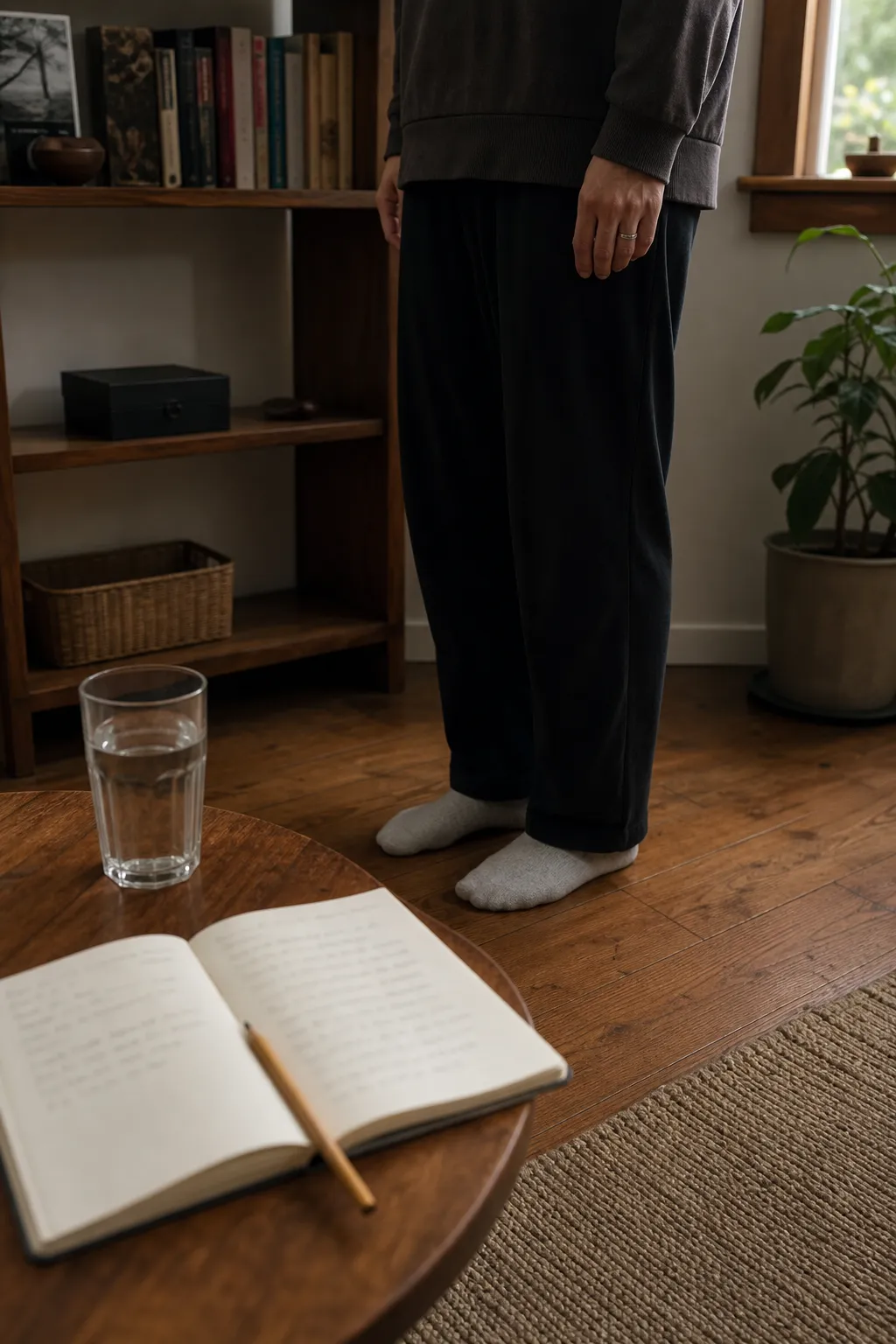
When the moment feels intense, use a short routine rather than a long ritual. Long rituals can keep attention locked on the sensation. A simpler structure is easier to follow.
First, separate from the trigger
Put the Moldavite down, remove the jewelry, or close the container. If you were comparing pieces, reading intense stories, or listening to someone describe extreme effects, stop that input too.
Second, orient to the room
Notice the floor, the chair, the wall, the light, the temperature, and ordinary objects around you. Touch something with a clear texture: wood, fabric, a countertop, a book, or a stone that is not part of the ritual context.
Third, support the body
Support the body without turning the moment into a performance. Sip water if appropriate. Eat something plain if you are hungry. Loosen tight clothing. Sit near fresh air. Keep breathing slow and unforced.
Fourth, record only what you can honestly say
“I felt overstimulated after holding Moldavite for ten minutes” is cleaner than “The stone opened something I cannot close.” The first sentence gives you usable information. The second may make the experience feel larger and harder to regulate.
Fifth, decide later
Do not make major spiritual, purchasing, relationship, or identity decisions while you feel activated. If you return to the stone, try a shorter session on another day and stop before the intensity peaks. If you do not want to return to it, that is also a valid boundary.
When to Take a Longer Break
A longer break makes sense when every interaction with the stone leaves you unsettled, when you start anticipating a reaction before you touch it, or when the story around the stone becomes more absorbing than your actual life.
Moldavite can remain meaningful as a collector object, symbol, or point of curiosity without needing to be worn, held, slept beside, or used in a daily practice.
Taking a break also helps separate the stone from the surrounding narrative. Sometimes the pressure comes less from the object and more from the expectation that Moldavite should be dramatic. If you step away for a week or more, you may get a clearer read on whether you want a gentler practice, a collector-oriented relationship, or no active use at all.
If you still want symbolic engagement, keep it brief and bounded. Do not combine it with sleep deprivation, intense emotional processing, breathwork, crowded events, or hours of online stories about extreme reactions. Keep the setting ordinary. Keep the time short. Keep the exit easy.
The safest spiritual frame is one that allows consent and stopping. If your interpretation of high-frequency energy makes you feel trapped, punished, chosen, or unable to pause, the frame itself needs softening. Grounding high-frequency energy should not mean overriding your own discomfort.
The Evidence Limit Matters
This page has a strict evidence boundary: no usable public sources, curated firsthand reports, clinical references, or authoritative materials were available for verifying Moldavite Flush as a defined phenomenon or for demonstrating the outcomes of grounding practices.
That means the advice stays modest. It treats the phrase as community language and the practices as gentle pacing steps, not as proven mechanisms.
That limit does not make the reader’s felt experience irrelevant. It means the article should not pretend to know more than it does. You can acknowledge, “This felt intense to me,” while also saying, “I do not know what caused it.” That combination is often more stabilizing than either dismissal or certainty.
If your experience is mild, the practical answer is to pause, ground, reduce stimulation, and resume only if you want to, at a slower pace. If your experience is strong, frightening, persistent, or physically concerning, the answer changes: get appropriate support and do not rely on Moldavite Flush safety boundaries alone. Spiritual language can help some people describe meaning, but it should not replace care when the body or mind is signaling real distress.
Short Answers to Remaining Questions
Should I keep wearing Moldavite if I feel overwhelmed?
No. If wearing it feels overwhelming, take it off and give yourself a break. You can revisit later with shorter contact, or you can decide that wearing it is not the right format for you.
Is the Moldavite Flush a sign the stone is authentic?
No. Do not use a subjective reaction as an authenticity test. A strong feeling, no feeling, or a spacey feeling does not establish whether a piece is genuine.
Can grounding make the feeling stop?
It may help some readers feel steadier because it lowers stimulation and shifts attention back to the present, but it should not be treated as a guaranteed result. If the sensation feels unsafe or medically concerning, seek appropriate support rather than trying to manage it through the stone.