Plasma & Vacuum: The Mechanics of "Dry" Tektite Glass
Pay attention. When acquiring green rough to set in wire wrap jewelry, distributing manufactured glass under false pretenses compromises professional integrity. Field practitioners encounter this scenario constantly. The primary hurdle stems from the substantial overlap in visual and physical characteristics between authentic impact material and synthetic laboratory replicas.
To definitively tell moldavite from a glass fake, operators must bypass surface aesthetics and analyze the violent formation mechanics. The material originated roughly 15 million years ago following a hyper-velocity kinetic event in the Bavarian region.
Consequently, authentic specimens register as fundamentally "dry" glass. If you are evaluating a new parcel of rough material, initiate a diagnostic breakdown across three specific technical vectors: hydrostatic density, internal microscopic flow patterns, and optical strain anomalies.
01 Core Prerequisites & Alternative Loadouts
Execute these protocols within a controlled setting. Guesswork has no place in gemological diagnostics. Assemble the following tools required before proceeding:
-
1Digital Carat Scale: Procure a highly sensitive unit (0.01g precision minimum) equipped with a hydrostatic weighing rig.
-
2Gemological Microscope: Ensure it handles 10x to 40x magnification and features darkfield illumination.
-
3Immersion Cell & Mineral Oil: Utilize these to neutralize surface scatter on unpolished specimens.
-
4Benchtop Polariscope: Deploy this for internal strain evaluation.
-
5Refractometer: Equip this with standard high-RI fluid. Follow established laboratory handling protocols for chemical exposure.
Alternative 1 (Microscopy)
Substitute a standard microscope with a 20x triplet jeweler's loupe paired with a concentrated LED penlight. This method requires increased visual focus but achieves similar mechanical results.
Alternative 2 (Polariscope)
Construct a basic polarizing unit using two polarized lenses. Position a white light source beneath the bottom lens, mount the specimen, and observe through the top lens while rotating the unit.
The "Dry Glass" Authentication Protocol
Treat this sequence as the core operational standard. Execute the procedure step-by-step without skipping phases.
Execute the Hydrostatic Specific Gravity (S.G.) Test
Operators must learn how to test S.G with strict precision. Because this material is an amorphous solid, its density remains highly specific. Calibrate your digital scale. First, weigh the dry specimen. Record the output. Next, suspend the material in a beaker containing room-temperature distilled water using a thin wire harness.
Ensure the specimen avoids contact with the glass walls, and log the suspended weight. Divide the dry weight by the difference between the dry and suspended measurements.
Before evaluating unknown material, always measure the value of a known sample (such as standard laboratory quartz) to verify equipment calibration. You must consistently duplicate to two decimal places.
If the calculated S.G. registers at 2.50 or higher, halt the assessment. Authentic material occupies a narrow range between 2.32 and 2.40.
Microscopic Internal Topography Scan
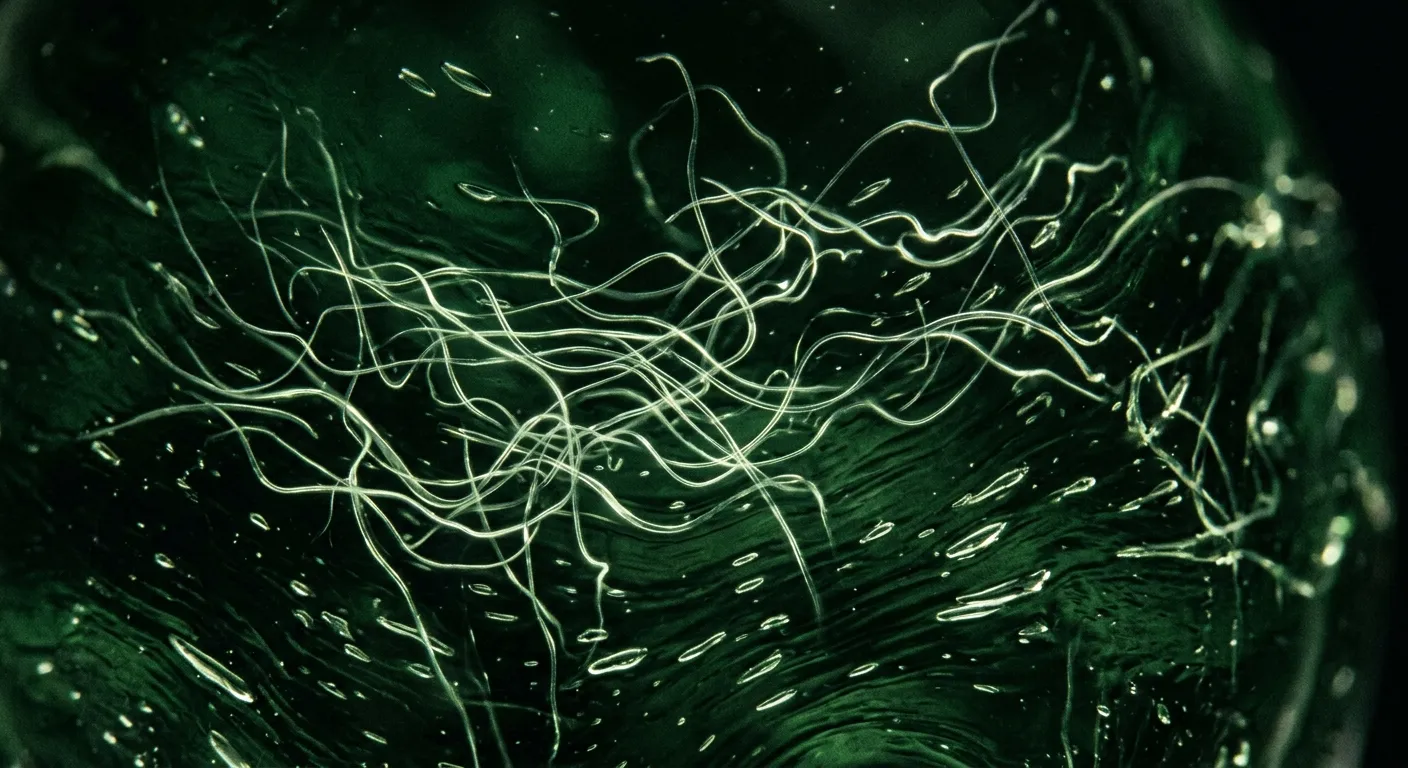
Submerge the rough specimen inside a glass cell filled with mineral oil. Liquid immersion cancels out surface etching interference, enabling direct optical access to the interior. You will use the microscope and study internal characteristics via darkfield illumination.
Polariscope Stress Testing
Activate the polariscope and position the specimen between the crossed polarizing filters. Because the material cooled rapidly during atmospheric reentry, it contains chaotic internal strain. Observe the specimen to see if it will show snake-like band under polariscope.
Rotate the specimen a full 360 degrees. Monitor for Anomalous Double Refraction (ADR). The schlieren bands should warp and shift dynamically.
If the specimen remains entirely dark and uniform, recalibrate. Zero-strain glass typically indicates controlled laboratory annealing.
The "Dryness" Volatile Assessment
Understand the volatile loss definition to accurately describe the material to clients. During the kinetic impact, the target rock underwent extreme volatile weight loss. Moisture, gases, and low-boiling-point elements vaporized instantly.
Laboratory mass spectrometry analysis of authentic material typically indicates near-zero moisture content.
Critical Errors to Avoid
Authenticating via Digital Media
It is fundamentally impossible to tell from an image whether rough material is authentic. Overseas manufacturing facilities utilize high-pressure molds cast from authentic Czech specimens.
Misinterpreting Surface Friction
Authentic material features a matte, deeply etched texture due to prolonged acidic soil exposure. Synthetic replicas often exhibit a slick or glossy exterior. If it feels unnaturally smooth, isolate it.
Relying Solely on the Refractometer
The RI for this material spans from 1.46 to 1.54. Numerous variations of commercial bottle glass share this exact optical range. Utilize RI strictly as a secondary data point.
Technical Operations FAQ
Q: International clients request explanations of the "dryness" factor in their native languages. What is the volatile loss meaning in hindi or volatile loss adalah (in Indonesian)?
A: Linguistic translation is secondary to mechanical explanation. Whether a client searches for Hindi equivalents or asks "volatile loss adalah..." (Indonesian for "volatile loss is..."), describe the physics directly. The kinetic impact generated sufficient thermal energy to boil away existing water. The glass registers as "dry" because vaporizable elements underwent complete annihilation during the initial formation sequence.
Q: What does the volatile loss meaning indicate regarding physical durability? Is it volatile vs unstable?
A: Separate the terminology. "Volatile" refers exclusively to the chemical elements (gases and moisture) vaporized 15 million years ago. It does not indicate structural instability. The material maintains chemical stability, though it registers as mechanically brittle (Mohs hardness of 5.5). Impact against hard surfaces will cause fracturing.
Q: When acquiring large parcels for inventory, do market observers consider genuine tektites less volatile investments?
A: Treat inventory acquisition objectively. Practitioners do not categorize physical specimens as the least volatile mutual funds. However, industry analysts report that due to the finite nature of Czech mining operations, authenticated material generally demonstrates stable market interest compared to synthetic or highly abundant quartz varieties.
Q: An evaluated green specimen registers an S.G. of 2.38 but lacks lechatelierite wires. Is it authentic?
A: Negative. Manufacturing facilities engineer synthetic glass to achieve a 2.38 S.G. by adjusting the silica-to-flux ratio. If 40x magnification reveals zero lechatelierite formations, the specimen is highly engineered factory glass. Rely on microscopic internal data above all other metrics.