The Unforgeable Signature: Identifying Lechatelierite as the Core Marker of Authentic Moldavite
The Diagnostic Hurdle: Navigating the Synthetic Glass Market
Picture yourself navigating a vendor booth in Tucson, examining a bulk parcel of rough green specimens. The visual cues align perfectly. The hue presents the expected forest-to-olive green gradient. The exterior features severe, jagged texturing. Yet, industry observations consistently highlight a critical vulnerability: both authentic moldavite and its synthetic counterparts are fundamentally glass.
Current manufacturing techniques yield imitation materials so advanced that relying solely on exterior visual checks introduces significant market valuation risks. The primary diagnostic hurdle centers on homogeneity. Engineered glass undergoes processes designed to ensure flawless, clear, and uniform consistency.
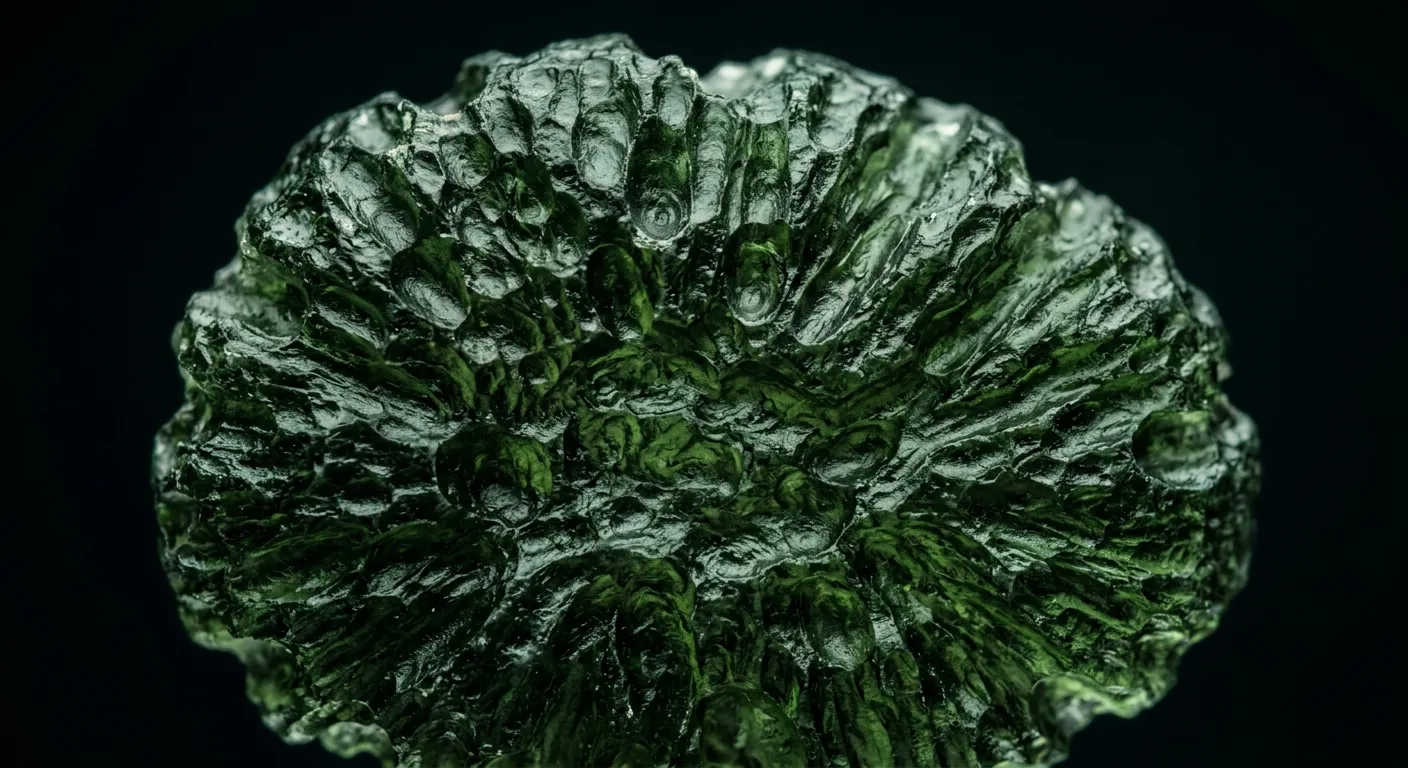
Conversely, moldavite originates from a high-velocity meteorite impact roughly 15 million years ago, resulting in a chaotic, flash-melted matrix of terrestrial silica. To accurately separate legitimate specimens from manufactured replicas, professionals must transition from surface-level observation to an inspection of the inner structure.
Preliminary Diagnostic Protocol
Execute a preliminary three-point diagnostic protocol before deploying advanced magnification hardware:
-
1
The Homogeneity Test:
Evaluate the specimen for excessive clarity. If a 20-gram piece displays perfectly uniform color distribution without any internal variations, consider this a primary warning sign.
-
2
The Luster Check:
Authentic rough tektites typically exhibit a matte, somewhat abrasive surface texture. Specimens displaying a greasy or wet-melted sheen frequently align with molded imitations.
-
3
The Bubble Geometry:
Deploy a 10x loupe for initial magnification. Examine the spherical nature of the trapped gas. Manufactured glass routinely features perfectly round, donut-like bubbles. Within genuine specimens, extreme flight dynamics dictate that these inclusions typically present as elongated or torpedo-shaped formations.
Required Hardware and Alternative Methodologies
To execute a conclusive identification protocol, standard visual checks fall short. You must use the microscope and study internal characteristics to expose the defining inclusion principles.
Primary Tools Required for Analysis
Gemological Microscope
10x to 60x magnification. Darkfield illumination is mandatory for isolating high-relief inclusions.
Refractometer
Target range: 1.46 to 1.54. Most authentic specimens cluster around 1.48 to 1.50.
Specific Gravity (SG) Kit
Digital scale with hydrostatic attachment. Target density: 2.32 to 2.40.
Polariscope
Used to evaluate anomalous double refraction and 'snake-like bands'.
Economical Alternatives
20x achromatic loupe + high-intensity LED penlight at 45-degree angle.
0.001g scale + distilled water + monofilament fishing line.
Step-by-Step Execution: Isolating Lechatelierite Signatures
Surface Decontamination and Immersion
Eliminate exterior optical interference before scanning for internal markers. The complex surface sculpturing of rough tektites scatters light and obscures internal pathways.
Swab the specimen with isopropanol. Submerge in cinnamon oil or clove oil to neutralize the rough exterior refractive interference.
Lacking immersion fluids, applying a single drop of distilled water onto a flat natural window provides temporary visibility.
If opaque under immersion, transition to a high-lumen cool-white LED positioned directly beneath the vessel.
Isolating the High-Temperature Silica Wires
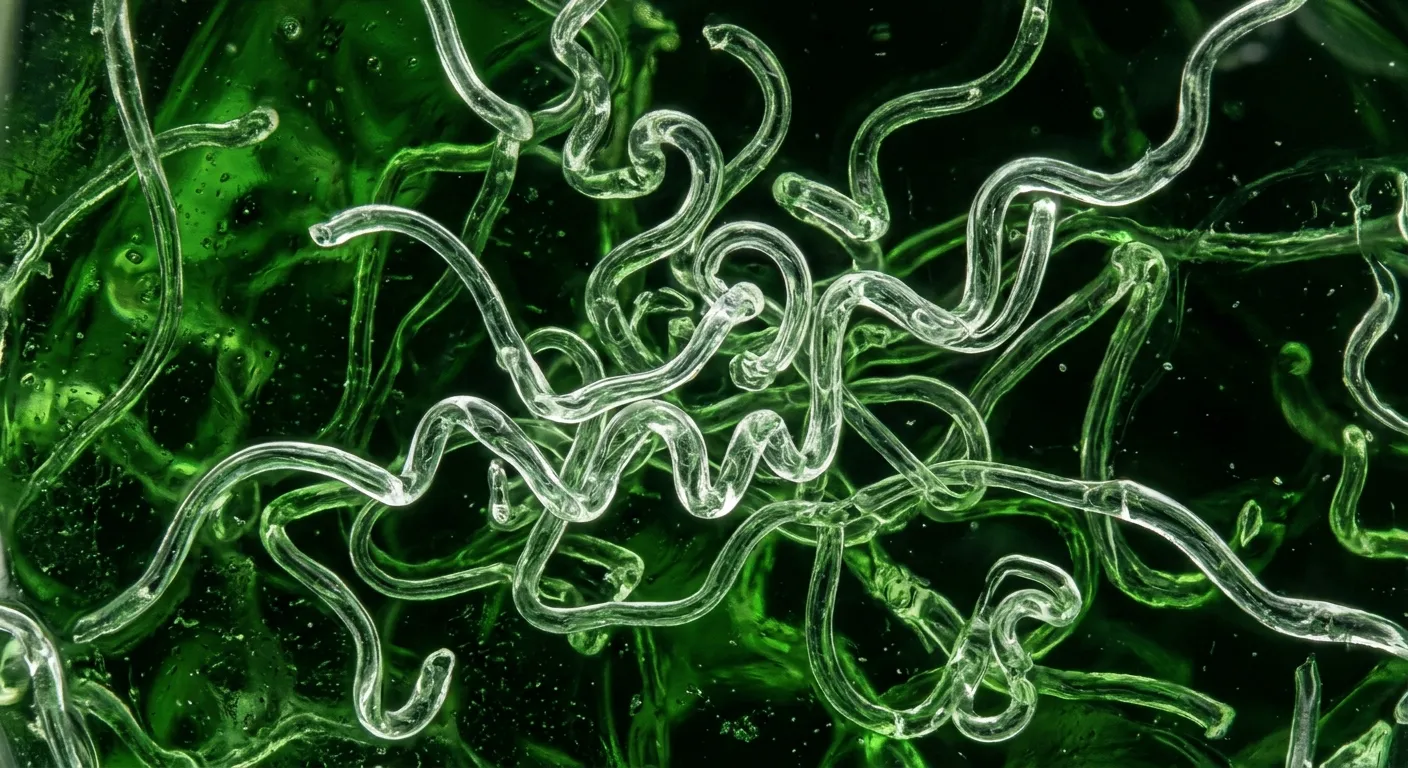
Visualizing Lechatelierite: The definitive authentication protocol.
Lechatelierite consists of high-temperature silica glass. Its formation requires the instantaneous melting of quartz grains during an impact event, followed by cooling rates so rapid that the silica fails to homogenize.
Calibrate magnification to 20x. Sweep the internal matrix for highly contorted, worm-like inclusions. These manifest as distinct, high-relief transparent threads.
Target the vicinity of elongated gas bubbles; silica wires frequently wrap around these cavities.
Straight, colorful threads indicate surface abrasions or synthetic microfibers, not genuine silica wires.
Charting the Internal Flow Dynamics
Standard gemological definitions of inclusions encompass distinct, non-homogeneous zones within the glass matrix that map the original flow currents of the molten material.
Rotate the specimen between the light source and lens. Scan for undulating, structural waves resembling syrup mixed into water.
Insert a basic diffuser over the illumination source to cut harsh glare and improve visibility of subtle swirls.
A perfectly transparent matrix devoid of flow distortion almost certainly indicates manufactured glass.
Assessing Internal Strain
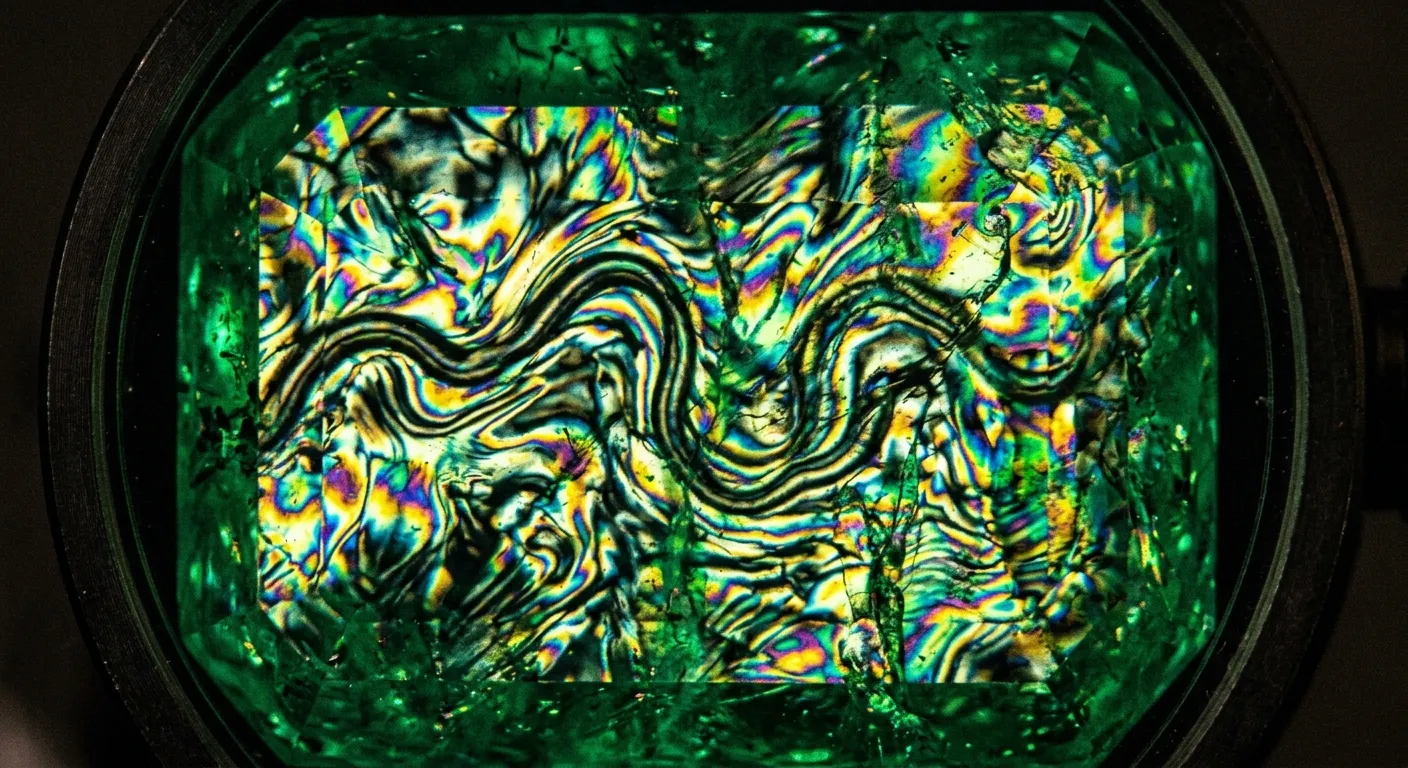
This procedure evaluates the inherent structural stress trapped within the specimen during its rapid atmospheric cooling phase.
Position the specimen between crossed polarizing filters. Execute a 360-degree rotation while maintaining focus.
Monitor for anomalous double refraction. Authentic patterns appear aggressive and fractured.
Finalizing Physical Constants
After confirming the presence of silica wires, you must compare the appearance against hard physical metrics to establish absolute certainty.
Data Visualization: RI vs SG Clustering
Interactive Chart Placeholder
Execute specific gravity calculation and secure an accurate refractive index reading. Readings hitting 1.52 or higher suggest manufactured glass.
Send high-value samples to an accredited lab for Raman spectroscopy to isolate the natural spectrum.
If the specimen remains uniformly dark and singly refractive throughout the entire rotational axis, you are likely handling a crystalline counterfeit.
Procedural Errors to Avoid
1. The Saturation Trap
Novice technicians frequently assume a specific bright green represents the exclusive hue of authentic material. Counterfeit operations routinely replicate this exact color profile. Never authorize an acquisition based strictly on color saturation.
2. Misinterpreting Textures
Contemporary counterfeit operations deploy aggressive acid-etching techniques to simulate natural aerodynamic sculpturing. If the exterior pitting exhibits repetitive symmetry or uniform depth, suspect a molded origin.
3. Disregarding Density
While synthetic manufacturers can match the refractive index, replicating the exact specific gravity remains highly problematic. Failing to measure density is a critical oversight in high-end replica detection.
Technical Briefing: Frequently Addressed Operational Queries
Q: Can manufacturing facilities artificially inject silica wires into synthetic glass?
A: Current industry observations indicate this is virtually impossible. Forming these structures demands temperature spikes exceeding 1700°C followed by near-instantaneous quenching. Attempts to manually introduce silica wires into a molten batch simply cause the material to melt and homogenize.
Q: Does green obsidian share identical properties with impact tektites?
A: They represent distinctly different materials. Obsidian classifies as volcanic glass, featuring a highly homogeneous structure. Most importantly, neither volcanic obsidians nor laboratory-grown matrices contain the high-temperature silica wires.
Q: Are perfectly spherical bubbles an automatic indicator of a counterfeit?
A: While stretched, aerodynamic gas pockets remain the standard diagnostic marker, perfectly round bubbles do occasionally manifest in authentic specimens. However, these spherical inclusions never appear in isolation; they consistently coexist alongside heavy flow lines.
Q: Is visual authentication possible through digital photography alone?
A: It remains impossible to tell from an image with absolute diagnostic certainty. Sophisticated manufacturing demands hands-on microscopic evaluation to verify the internal structural data.
Q: What does the presence of faceted internal crystals indicate?
A: While exceedingly rare, natural specimens can occasionally trap microscopic mineral grains. However, detecting large, highly structured crystalline formations usually indicates the specimen is either a variant of natural obsidian or a completely different mineral species.
Transition your operational protocols away from surface-level visual assessments. Adopt a strictly structural diagnostic framework. When vendors challenge your authentication parameters, rely on empirical data. Demonstrate the stress patterns under polarized light and highlight the high-relief silica wires under magnification. Establishing a rigorous, equipment-based methodology remains the most reliable strategy for navigating this complex sector of the market.